Cover Crop Strategies editors encounter a variety of articles, social media posts, podcasts and videos that offer a unique look at various aspects of our great agricultural industry. Here is our favorite content from the past week. The Best of the Web This Week series is brought to you by Salford Group.
For now, the agency is focused on double-crop soybeans and double-crop sorghum, though they are examining the possibility of additional other crops at some point in the future.
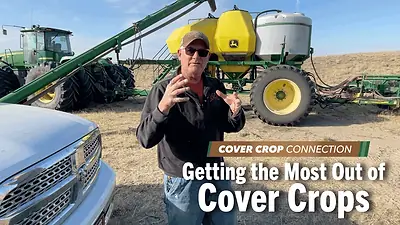
On this week’s edition of Cover Crop Strategies, brought to you by Verdesian Life Sciences, soil health specialist Jay Fuhrer breaks down the 5 principles of soil health. Fuhrer also shares what he's learned about cover crops over the past 40 years and answers the question of whether it's more important to feed the soil or the plant.
Paul Tomlinson likes being different. He likes trying new things, and he doesn’t mind going out on a limb. When the 28-year-old third-generation farmer decided to plant a cover crop and take a no-till approach to growing vegetables, he knew he might turn a few heads. “You get some funny looks when you have it planted beside the road,” Tomlinson said. “People stop and say, ‘What in the world is this guy doing?’”
An alliance of conservationists, farmers and cattle ranchers in Chiapas, Mexico, is working to incorporate 6.2 million acres of land into sustainable management schemes, focusing on soil health and aiming to restore and reforest 3.5 million acres.
Indiana grower Jason Federer says long-standing use of cover crops is helping transition away from chemicals as he counts soil health the ultimate “long-term profit.”
Jason Federer says he’s been around cover cropping for as long as he can remember. He recalls watching his father frost-seed alfalfa and clover into wheat on their farm near Wolcott in northwest Indiana.
Minnesota grower Tom Cotter shares how he strategically uses cover crops, as well as tips on seeding varieties and successfully grazing livestock on covers.
Cover Crop Strategies editors encounter a variety of articles, social media posts, podcasts and videos that offer a unique look at various aspects of our great agricultural industry. Here is our favorite content from the past week. The Best of the Web This Week series is brought to you by Salford Group.
On this week’s edition of Cover Crop Strategies, brought to you by Verdesian Life Sciences, Myron Sylling, a no-tiller from Spring Grove, Minnesota, details how cover crops are paying off, from scavenging nutrients to increasing soil organic matter by 1%.
The National No-Tillage Conference returns January 12-15, 2027!Build and refine your no-till system with dozens of new ideas and connections at the 35th Annual National No-Tillage Conference in Indianapolis, Jan. 12-15, 2027. Experience an energizing 4-day agenda featuring inspiring general session speakers, expert-led No-Till Classrooms and collaborative No-Till Roundtables. Plus, Certified Crop Adviser credits will be offered.
Last month I had the chance to visit with Douglas Poole on his farm in Waterville, Wash., where he is proving that no-till, cover crops and a regenerative farming system can not only work, but thrive in his part of the country.