While choosing the right cover crop, or mix of covers, for a farm can be a challenge, there’s also an art to terminating covers that don’t winterkill with the right products at the right time.
The 2019 growing season came and went and left many fields in a state of disarray heading into 2020. Many growers that were unable to plant decided to use cover crops, to reduce soil erosion and provide some weed suppression during the extended fallow period. Read more in this article from Ohio's Country Journal.
It appears that the level of adoption for cover cropping in California is significantly lagging behind the rest of the country. While there are a number of different factors that can act as a barrier for implementing cover crops into an agricultural operation, an interesting trend was discovered when looking at the data from the 2017 census of agriculture. Read more in this article from AgNet West.
Roller-crimping is a simple task, but thorough cover crop termination with this equipment requires using the right plant varieties and carrying out operations at the right time.
McFarlane Ag recently introduced its new roller crimper product. The newest addition to the McFarlane line adjusted design elements to eliminate many problems growers typically face when using roller crimpers.
Experts at Kansas State University Extension review important considerations and guidelines from terminating cover crops properly, including NRCS rules and challenges that can be posted by herbicide programs.
Sniff! Up in the air. It’s smelly cabbage. It’s rotten eggs. It’s sewer-gas! All three of those guesses were posted on social media regarding the origin of a mysterious strong and pungent smell in some rural areas of Bartholomew County, Indiana. Turns out, it was just radishes planted as cover crops that were decomposing.
If you are planning to plant into a rye cover crop, it's best to wait to do so until 10 days after spraying the cover crop, according to Kevin Shelley with the University of Wisconsin-Madison Nutrient & Pest Management Program.
The National No-Tillage Conference returns January 12-15, 2027!Build and refine your no-till system with dozens of new ideas and connections at the 35th Annual National No-Tillage Conference in Indianapolis, Jan. 12-15, 2027. Experience an energizing 4-day agenda featuring inspiring general session speakers, expert-led No-Till Classrooms and collaborative No-Till Roundtables. Plus, Certified Crop Adviser credits will be offered.
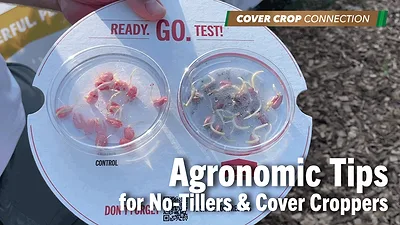
This week we are looking at a clip from Cody Hornaday, a technical agronomist with Koch Agronomic Services, as he explains a few tips that no-tillers and cover croppers should keep in mind for unlocking phosphorus in their soils.
Family Owned since 1964 – Remlinger Manufacturing was founded by Wilbur Remlinger in 1964 and the family tradition continues today with Wilbur’s grandson being the current CEO/President. Although the business has expanded and diversified, family remains a core value to the company and is evident in the company culture.
Made in USA – Remlinger Manufacturing is proudly located in Kalida, Ohio. We have dealers located across the US and Canada to conveniently serve our customers.
Quality Driven – With over 60 years of producing farm equipment, we continue our tradition of manufacturing high quality attachments and products to serve farmers around the globe.
Byron Seeds LLC is a team of individuals who have a passion for high energy forages, cover crops, and proper farming techniques. Byron personnel seek to understand our clients’ goals so that we may provide the best environment for our clients’ success through research, education, support, and...
Our years of experience and network of dealers make us the ideal choice for your mowing, no-till and horse drawn equipment needs. Use our Dealer Locator to contact your nearest I&J dealer today.