Now is the time to start planning for how to terminate cover crops in the spring. It all depends on what your purpose is for growing covers. Covers should be terminated 2 weeks prior to planting cash crops such as corn or soybeans or the temperature hits above 50 degrees F.
David Brandt farms 1,150 acres in central Ohio's Fairfield County. He began no-till farming in 1971 and has been using cover crops since 1978. David has participated in yield plots for corn, soybeans and wheat into various covers.
In this podcast, Dr. Avat Shekoofa discusses research on the impact of different cover crop species on pigweed germination, including cover crop termination timing.
David Brown experimented with many cover crops before settling on annual ryegrass for his 80-acre organic farm, Mustard Seed Farms. He found it to be the easiest cover crop to manage, especially when terminating it and incorporating it into the soil in the spring, which is typically cool and wet in his region.
Farmers looking to incorporate cover crops into rotation are often left with the issue of terminating the crop. Is spraying enough? If you need to work the ground, what’s the best option? Find out in this article from Real Agriculture.
Up until last week, dicamba-related complaints in Illinois were minimal for 2019. A recent uptick in complaints, however, dashed any hope that off-target issues would be less this year than during the previous two growing seasons, according to the University of Illinois.
Here are the latest guidelines on cover crop termination from the NRCS — for crops planted in the 2020 crop year and later — for growers who are utilizing crop insurance.
With word that Austria will enact a ban on glyphosate, the bad news continues to mount for Bayer, the maker of Roundup, which contains the widely disputed chemical.
A press release from USDA explains how the 2018 Farm Bill mandated changes to the treatment of cover crops, including adding more flexibility to when cover crops must be terminated while remaining eligible for crop insurance.
When it comes to seeding cover crops on prevented-planting acres, there are lots of details for growers to consider — including what to plant and how long to let it grow.
The National No-Tillage Conference returns January 12-15, 2027!Build and refine your no-till system with dozens of new ideas and connections at the 35th Annual National No-Tillage Conference in Indianapolis, Jan. 12-15, 2027. Experience an energizing 4-day agenda featuring inspiring general session speakers, expert-led No-Till Classrooms and collaborative No-Till Roundtables. Plus, Certified Crop Adviser credits will be offered.
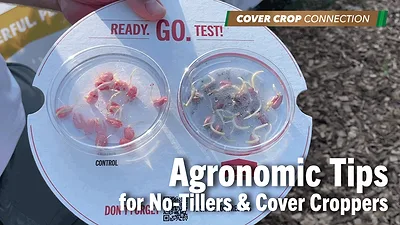
This week we are looking at a clip from Cody Hornaday, a technical agronomist with Koch Agronomic Services, as he explains a few tips that no-tillers and cover croppers should keep in mind for unlocking phosphorus in their soils.

Family Owned since 1964 – Remlinger Manufacturing was founded by Wilbur Remlinger in 1964 and the family tradition continues today with Wilbur’s grandson being the current CEO/President. Although the business has expanded and diversified, family remains a core value to the company and is evident in the company culture.
Made in USA – Remlinger Manufacturing is proudly located in Kalida, Ohio. We have dealers located across the US and Canada to conveniently serve our customers.
Quality Driven – With over 60 years of producing farm equipment, we continue our tradition of manufacturing high quality attachments and products to serve farmers around the globe.
Byron Seeds LLC is a team of individuals who have a passion for high energy forages, cover crops, and proper farming techniques. Byron personnel seek to understand our clients’ goals so that we may provide the best environment for our clients’ success through research, education, support, and...
Our years of experience and network of dealers make us the ideal choice for your mowing, no-till and horse drawn equipment needs. Use our Dealer Locator to contact your nearest I&J dealer today.