As demand for cover crops increases, Mizzou’s Center for Regenerative Agriculture is leading the National Cover Crop Variety Improvement and Seed Production Project, a $10 million effort to develop cover crop varieties and provide new markets for farmers nationwide.
Cover crops can provide many benefits. They can suppress weeds, prevent erosion, increase water infiltration and water-holding capacity, improve nutrient cycling and create pollinator habitat.
Some herbicides remain in the soil for months after application, so no-tillers must pay attention when selecting seeds & assessing for potential herbicide damage.
A University of Kentucky study titled "Productivity benefits of cereal-legume cover crop mixtures under variable soil nitrogen and termination times" suggests that mixing cover crops is a beneficial strategy for modern agriculture.
Farmers usually plant cover crops after harvesting their main crop. This prevents erosion of the soil and nutrient leaching. The roots of these crops also stabilize the structure of the soil. It had been assumed that a mixture of different cover crops would result in particularly intensive rooting.
Getting the greatest benefit out of cover crops requires a management level on par with corn and soybeans. Growers should start by testing a cover crop on a single field and expand.
Cover Crop Strategies editors encounter a variety of articles, social media posts, podcasts and videos that offer a unique look at various aspects of our great agricultural industry. Here is our favorite content from the past week. The Best of the Web This Week series is brought to you by Salford Group.
Father-son duo takes leap of faith after eye-opening experience at National No-Tillage Conference.
August 30, 2022
No-till is nothing new for the Reddick family. Brad Reddick remembers growing up on the 1,800-acre farm in Bardwell, Ky., watching his father no-till the rolling grounds and conventionally till the creek bottom grounds over 50 years ago.
From seeding to termination, cover crop users and seed companies share their best advice for successfully incorporating cover crops into your operation, regardless of your choice in tillage tools.
Whether a grower is making multiple tillage passes or is a dedicated no-tiller, their reasons for adding cover crops to their operations are probably pretty similar.
Farmers from 30 different states participated in the 3rd annual Cover Crop Benchmark Study. The comprehensive survey featured 48 questions about several topics including management practices, motivations, challenges and expenses in 2021 and plans for 2022. Here are 5 key takeaways.
The National No-Tillage Conference returns January 12-15, 2027!Build and refine your no-till system with dozens of new ideas and connections at the 35th Annual National No-Tillage Conference in Indianapolis, Jan. 12-15, 2027. Experience an energizing 4-day agenda featuring inspiring general session speakers, expert-led No-Till Classrooms and collaborative No-Till Roundtables. Plus, Certified Crop Adviser credits will be offered.
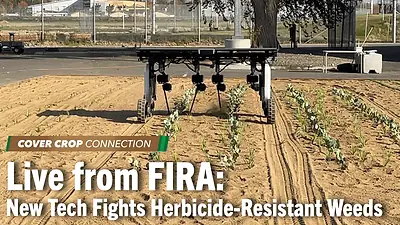
I'm in Yakima, Washington this week at FIRA USA where there's always lots of great ag technology on display. Why don't we go take a look at the newest edition of the Aigen robot. We'll hear from Kenny Lee, the CEO of Aigen.