
Production will be phased out at Syngenta’s Huddersfield, U.K., site, the company’s only manufacturing facility for the active ingredient globally. A small scale, multi-product production unit at the site will also close.
Farmers across the U.S.—whether they use cover crops, formerly used them, or have never planted covers—are invited to share their insights on cover crops in the National Cover Crop Survey.
Each month, the conservation ag group at Cornell University offers an analysis of the latest scientific papers dealing with conservation agriculture research from around the world. For this on-going web series, our editors will be selecting several research papers from the Cornell list that will be of special interest to North American no-tillers, strip-tillers and cover croppers.
Sixty years of crop diversification with perennials improves yields more than no-tillage in Ohio grain cropping systems
Conservation Tillage Practices on GHG Emissions, Soil Health and Overall Agricultural Sustainability
Long-term continuous no-till corn-soybean systems: Examining soil carbon sequestration and nitrogen accumulation across various pools
Assessing the agricultural, environmental, and economic effects of crop diversity management: A comprehensive review on crop rotation and cover crop practices
Cover Crops Optimize Soil Fertility and Soybean Productivity in the Cerrado of MATOPIBA, Brazil
Short-term no-tillage improves soil water retention and maintains soil aeration at high moisture conditions despite reduced macroporosity
Tillage Radish as Cover Crop Improves Soil Health Indicators Depending on Pedoclimatic Conditions.
Noah Newman has been promoted to Managing Editor of Strip-Till Farmer and Precision Farming Dealer, and Mackane Vogel has been promoted to Managing Editor of No-Till Farmer an Cover Crop Strategies.
Two crucial factors are limiting weed control options and pushing no-till farmers in the Central Great Plains into a corner: herbicide resistance and water availability.
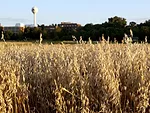
Oats were once a major Minnesota crop, with about 4 million acres planted annually on average until the early 1960s. But in 2025, oats accounted for only 195,000 planted acres in Minnesota, and those oats were used mostly for livestock feed and straw bedding.
Camelina is a crop that produces an oilseed which can be used to create biofuel, and the winter variety of camelina can be planted in the fall and harvested the following summer that offers some interesting opportunities for farmers.
The National No-Tillage Conference returns January 12-15, 2027!Build and refine your no-till system with dozens of new ideas and connections at the 35th Annual National No-Tillage Conference in Indianapolis, Jan. 12-15, 2027. Experience an energizing 4-day agenda featuring inspiring general session speakers, expert-led No-Till Classrooms and collaborative No-Till Roundtables. Plus, Certified Crop Adviser credits will be offered.
Last month I had the chance to visit with Douglas Poole on his farm in Waterville, Wash., where he is proving that no-till, cover crops and a regenerative farming system can not only work, but thrive in his part of the country.