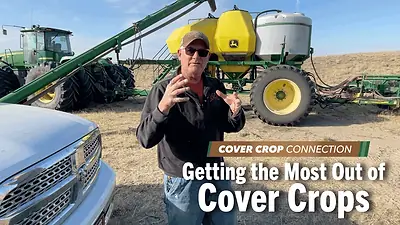
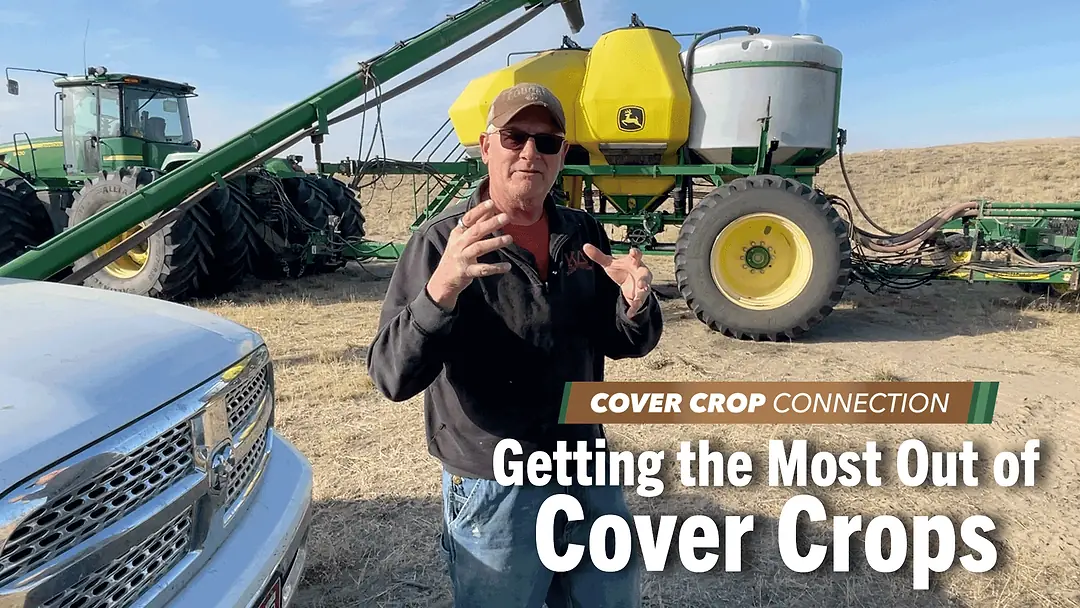
Last month I had the chance to visit with Douglas Poole on his farm in Waterville, Wash., where he is proving that no-till, cover crops and a regenerative farming system can not only work, but thrive in his part of the country. Let’s hear a little bit more about what his cover crop program looks like.
“What we've not settled on, but we've found some great successes with a forage sorghum. We usually mix that with a radish facilia that we'll have some flax, maybe an oat or barley. We've had some good luck with winter turtiqueli being in there, a spring tread, trying just to match up our deep furrow or our deep burrowing roots with our fibrous roots, just try to get that mix. As I mentioned, we are somewhat fallow. And so one of the things that I've attempted to do with the cover crops is eliminate fallow by just having something growing that's green all year. If you look back to the soil health principles, need to have a growing root, we need to have cover. What we learned with the cover crops is they were cute. I was neat to say I had cover crops, but until we introduced the cattle integration, I was struggling to see the fit in them because as you mentioned, where do we harvest them?”
“And so they were going to full reproduction and dying and I was actually hardening the ground worse by letting them do that. And so we now make sure that all cover crops are grazed and so that's how they're taken down. I don't take any cover crop down with any chemical. Everything's grazed and then we'll either seed into it as I was mentioning, we're going to try frost seeding into a cover crop residue this fall and everything gets seeded in that next spring. One of the things we have learned is the cover crop of course revs the soil biology up. Everything gets excited and then I come back with a monoculture crop. And so in the last couple years we've introduced just coming back with a companion, soil wheat and a flax or just something a little different in a companion. And that seemed to have mitigated a lot of weed pressure and we've actually had some pretty good success with just yield. ”
Stay tuned for an upcoming farmer profile about Douglas Poole and all the neat things he has going on on his no-till farm in the Pacific Northwest. You’ll be able to find that article in an upcoming print edition of No-Till Farmer magazine as well as no-tillfarmer.com.