For a week in October, several of my classes at UW-Platteville were cancelled so I headed home to Illinois where harvest was in full swing. I was quickly reminded how harvest is truly a whole family affair. Grandpa, Dad and my uncle were out in the field running the combine and grain carts. Mom was always on call to help move equipment (she calls herself the farm taxi) and make sure everyone is well-fed. While I was at home, I enjoyed some of her delicious cheesy potatoes, pork roast and apple crisp – just to name a few scrumptious homemade dishes.
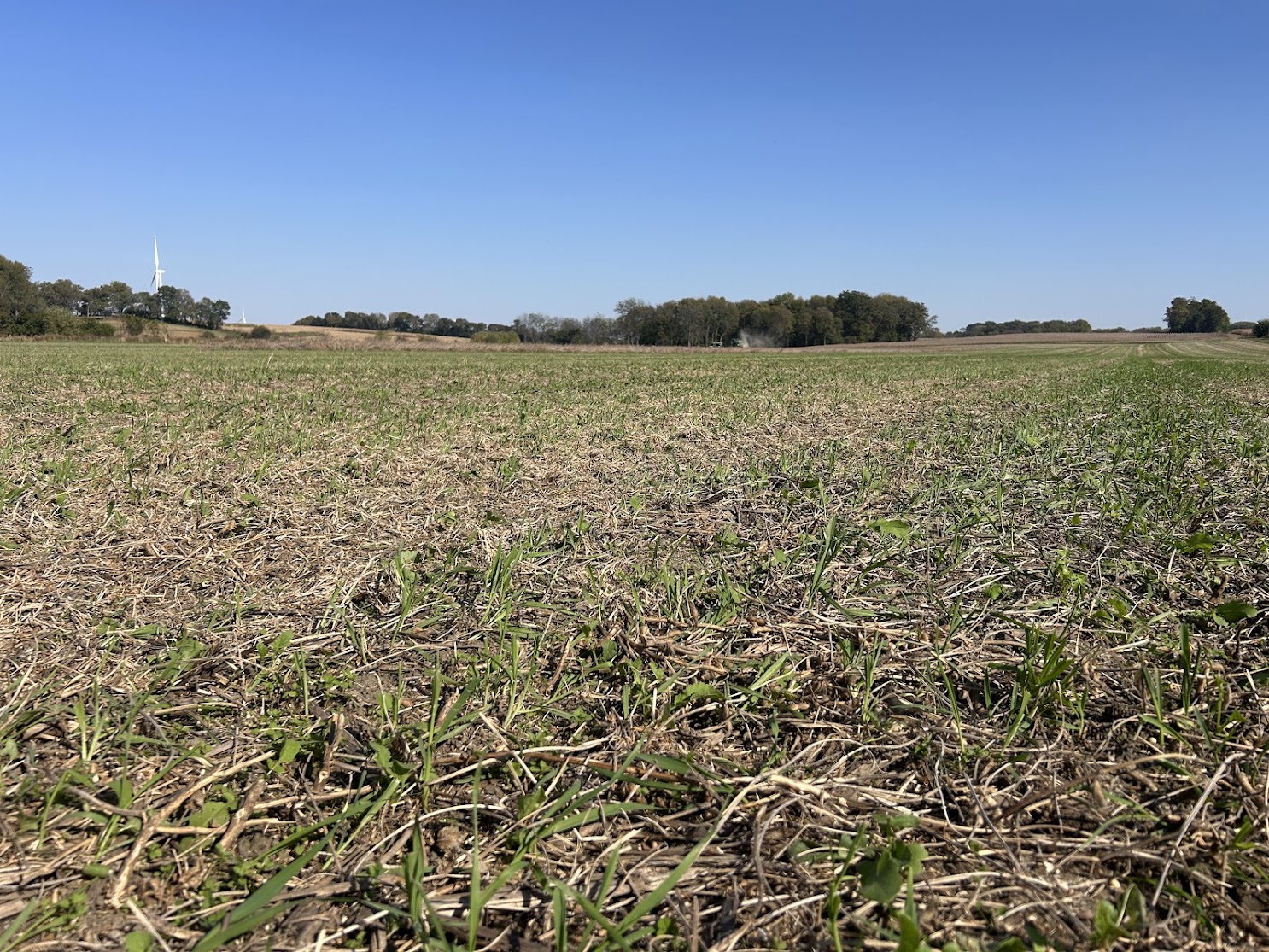 In the month since seeding, the cover crop mix of oats, barley, daikon radish and balansa clover has already put on several inches of growth while the soybeans were finishing drying down.
One afternoon, Mom and I hopped in the truck and drove down to a bottom ground field where they were almost finished cutting beans. As we pulled in the lane, I was surprised to see the freshly cut field was covered in a blanket of green cover crops. Already several inches tall, the mix of oats, barley, daikon radish and balansa clover had been able to take advantage of over a month of sunlight, warmth and moisture before the beans were even harvested. Being on a somewhat flood-prone field (right along the South Edwards River), Dad was concerned about the possibility of a wet fall that could delay harvest and make it more difficult to drill the cover crops. As a result, he elected to use an airplane to seed the cover crops.
According to the 2026 National Cover Crop Report from CTIC, SARE and ASTA, most farmers elect to plant their own cover crops, with 67.3% of farmers responding as such. The next most popular method, utilized by 12.8% of respondents, was hiring an aerial applicator. Diving into the statistics deeper shows that 65.1% of respondents use a drill to plant their cover crops, while 42.6% ground broadcast the seed, 19.1% use an airplane or helicopter to broadcast the seed and 14.5% use a drone.
The cover crops were seeded on September 23, at a rate of 20 pounds per acre for each the oats and barley while the radish and clover were each applied at 3 pounds per acre. Selected for their soil health benefits, to feed soil biology and sequester nutrients, the additional month of sunlight allowed for significantly more plant growth. The oats and radish will especially benefit from the earlier seeding since they will winter kill. In a few weeks, Dad plans to apply lime, run a strip-till bar and apply anhydrous, MAP, potash and humates in preparation for planting corn in the spring.
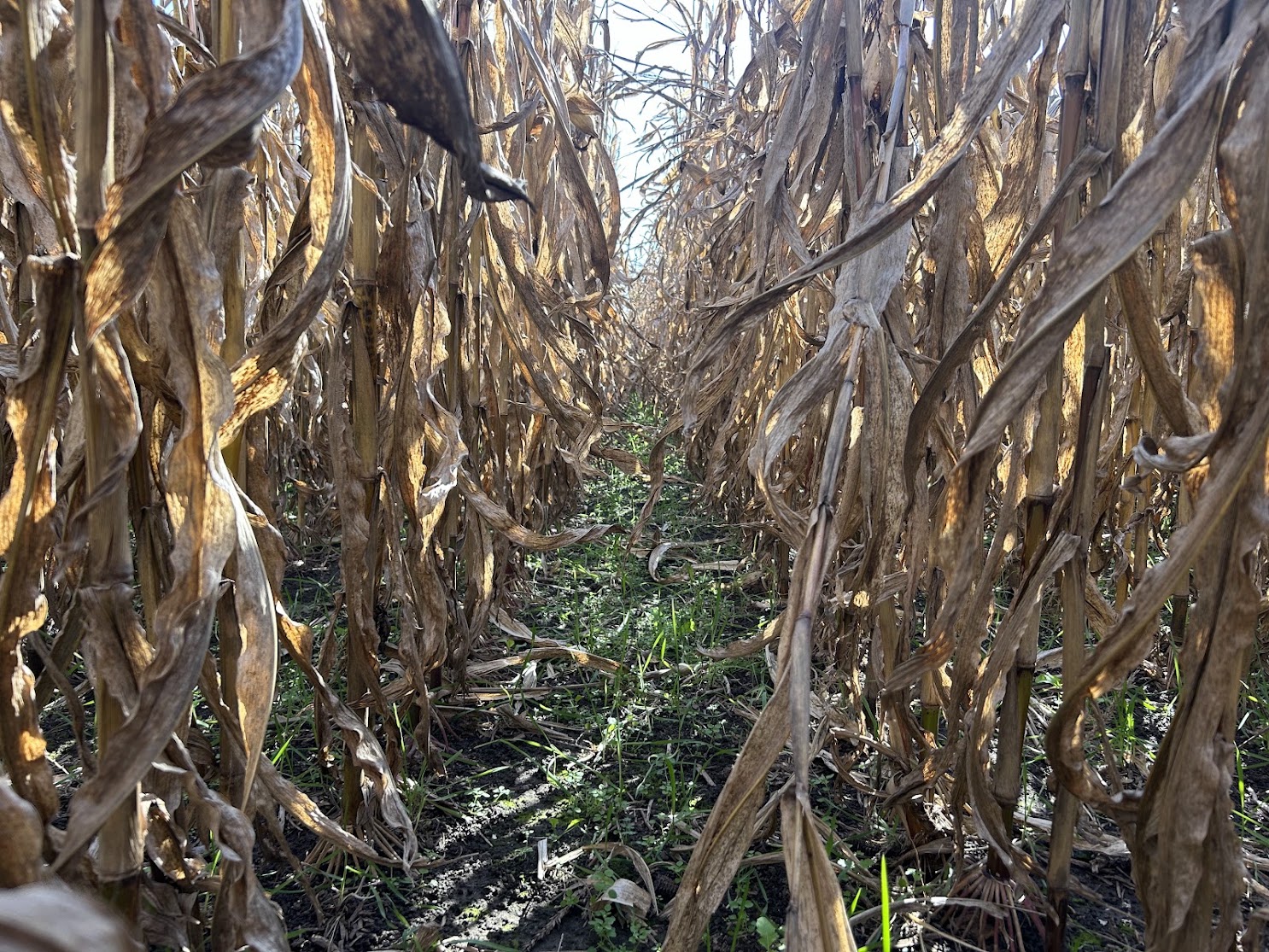 The cover crop mix of rye and rapeseed flown into standing corn has put on several inches of growth ahead of corn harvest.
We also checked on the cover crop mix of rye and rapeseed flown into standing corn in an adjacent field. The contrast between the dark soil, vibrant green cover crop and the dried corn was striking. While visually appealing, the soil biology likely found the root exudates of the rye and rapeseed even more appealing, as those sugars are an important food source for them (just like Mom’s food for me!).
Spending time at home and driving several hours through the rural Midwest to return to school once again reminded me of the valuable work farmers do and how year-round pressures mount in the fall as they evaluate if they made the best decisions for their farm leading up to harvest.
So, thank you farmers, for feeding and fueling America and the world!