Each month, the conservation ag group at Cornell University offers an analysis of the latest scientific papers dealing with conservation agriculture research from around the world. For this on-going web series, our editors will be selecting several research papers from the Cornell list that will be of special interest to North American no-tillers, strip-tillers and cover croppers.
Sixty years of crop diversification with perennials improves yields more than no-tillage in Ohio grain cropping systems
Conservation Tillage Practices on GHG Emissions, Soil Health and Overall Agricultural Sustainability
Long-term continuous no-till corn-soybean systems: Examining soil carbon sequestration and nitrogen accumulation across various pools
Assessing the agricultural, environmental, and economic effects of crop diversity management: A comprehensive review on crop rotation and cover crop practices
Cover Crops Optimize Soil Fertility and Soybean Productivity in the Cerrado of MATOPIBA, Brazil
Short-term no-tillage improves soil water retention and maintains soil aeration at high moisture conditions despite reduced macroporosity
Tillage Radish as Cover Crop Improves Soil Health Indicators Depending on Pedoclimatic Conditions.
The positives of planting cover crops include supporting the local environment and making crops more productive and climate-resilient. Thanks to cover crops, no-till and crop rotation, Willott says his farm still had a fairly good harvest despite this year’s drought, extreme heat and flooding.
Virginia farmers Clay Lowe of Cedar Point Farms, Paul Davis of Davis Produce and Jamie Shenk of Beauregard Farms explain how cover crops are an integral part of their weed management program and how they help improve crop productivity during droughts.
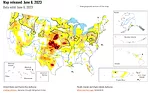
In this episode of Conservation Ag Update, University of Illinois ag professor Gary Schnitkey has the latest on drought conditions and explains why there’s still hope for above average yields. Plus, we take a trip back to 1988, when President Ronald Reagan visited drought-stricken Illinois. This episode of Conservation Ag Update is brought to you by Yokohama Off-Highway Tires.
A global meta-analysis was conducted using 1,196 paired observations from 86 published articles assessing the effect of water stress on weed germination, growth characteristics and seed production.
In this episode of Conservation Ag Update, we explore how no-tillers are holding up in abnormally dry conditions throughout most of the U.S. Independent agronomist Jim Stute checks in from southeastern Wisconsin, and no-tiller Ryan Gibbs reports from eastern Iowa, where both areas have received minimal rainfall since April. This episode of Conservation Ag Update is brought to you by Saddle Butte Ag Bio Till Cover Crops.
Struggling with drought? Find practical solutions using no-till and cover crops with the help of our recommended articles from No-Till Farmer and Cover Crop Strategies.
The Midwest is dry and experiencing drought problems, especially the Mississippi river with reduced barge traffic. Most no-tillers want to know: what is the probability of a drought next year?
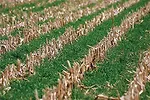
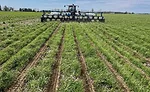
The Isley family has improved water retention by planting annual ryegrass into standing corn and seeding annual ryegrass and rapeseed prior to strip-tilling.
In 2012, the Isley family took a firm dislike to using the word “dirt.” They had gone through a substantial drought and were working ground, watching it turn to powder.
Source: North Dakota State University Extension press release
The drought of 2021 left many ranchers short of feed, both grazing forage and hay. A great option for spring grazing or hay production is winter cereals. Read this article from North Dakota State University.
The National No-Tillage Conference returns January 12-15, 2027!Build and refine your no-till system with dozens of new ideas and connections at the 35th Annual National No-Tillage Conference in Indianapolis, Jan. 12-15, 2027. Experience an energizing 4-day agenda featuring inspiring general session speakers, expert-led No-Till Classrooms and collaborative No-Till Roundtables. Plus, Certified Crop Adviser credits will be offered.
In our latest edition of the No-Till Farmer Newsletter, you may have seen our No-Till Innovator Special Report which includes tips and advice from expert no-tillers, agronomists and researchers.
Family Owned since 1964 – Remlinger Manufacturing was founded by Wilbur Remlinger in 1964 and the family tradition continues today with Wilbur’s grandson being the current CEO/President. Although the business has expanded and diversified, family remains a core value to the company and is evident in the company culture.
Made in USA – Remlinger Manufacturing is proudly located in Kalida, Ohio. We have dealers located across the US and Canada to conveniently serve our customers.
Quality Driven – With over 60 years of producing farm equipment, we continue our tradition of manufacturing high quality attachments and products to serve farmers around the globe.
Byron Seeds LLC is a team of individuals who have a passion for high energy forages, cover crops, and proper farming techniques. Byron personnel seek to understand our clients’ goals so that we may provide the best environment for our clients’ success through research, education, support, and...
Our years of experience and network of dealers make us the ideal choice for your mowing, no-till and horse drawn equipment needs. Use our Dealer Locator to contact your nearest I&J dealer today.