Crop diversity and biological activity in a cover-cropped farming system ensures healthy interactions between plants, roots and soil organisms, says Keith Berns.
Likening a healthy, robust industrial economy to the types of biological activities taking place underground in a no-till, cover-cropped farming system isn’t a stretch of the imagination.
Research on two southern Illinois farms shows the potential of using early maturity crops to establish covers sooner and boost yields in poorly drained, drought-prone, underperforming fields.
Randy McElroy sees the tough soils sometimes from behind sunglasses, because when the ground dries out completely it can be a white as a sand beach in Florida.
The movement underway with large agribusinesses wanting to connect their sustainability programs more closely with their suppliers could mean some new advantages and opportunities for market-savvy no-tillers.
In this episode of the No-Till Farmer podcast, brought to you by Montag Mfg., we welcome Barry Fisher, a veteran soil health expert and regional team leader with Indiana’s NRCS office to discuss soil health strategies.
‘Extending the bloom’ with buffer zones, cover crops and native prairie grass strips helps nurture the symbiotic relationship between insects, soils and flowering plants.
In an age of surface-applied insecticides and seed treatments, the importance of beneficial insects and natural pollinators to a thriving agricultural ecosystem can easily be overlooked.
Crop diversity and biological activity in a cover-cropped farming system ensures healthy interactions between plants, roots and soil organisms, says Keith Berns.
Likening a healthy, robust industrial economy to the types of biological activities taking place underground in a no-till, cover-cropped farming system isn’t a stretch of the imagination, says Keith Berns.
Managing a dairy farm that traces its roots back 170 years isn’t out of the ordinary for Greenleaf, Wis., no-tiller Dan Brick. The fact that Brickstead Dairy is Wisconsin’s 2017 Leopold Conservation Award recipient, however, is a fairly recent development.
Howling winds, dryness and poor soil quality create tough conditions in South Africa, but Egon Zunckel is making no-till work with limited irrigation, cover crops and livestock.
The National No-Tillage Conference returns January 12-15, 2027!Build and refine your no-till system with dozens of new ideas and connections at the 35th Annual National No-Tillage Conference in Indianapolis, Jan. 12-15, 2027. Experience an energizing 4-day agenda featuring inspiring general session speakers, expert-led No-Till Classrooms and collaborative No-Till Roundtables. Plus, Certified Crop Adviser credits will be offered.
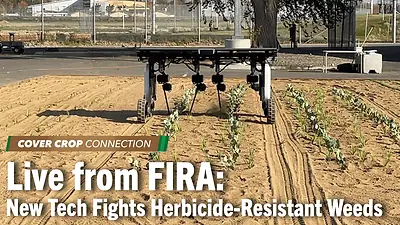
I'm in Yakima, Washington this week at FIRA USA where there's always lots of great ag technology on display. Why don't we go take a look at the newest edition of the Aigen robot. We'll hear from Kenny Lee, the CEO of Aigen.