Editors' Picks

Biomass Differences in Summer-Seeded Cover Crops

When faced with a crop failure due to severe weather, or conditions prevent planting in the first place, seeding cover crops on these acres can help control weeds and protect soil from erosion as well as provide other soil health benefits. Trials from the University of Minnesota reveals which covers grow the most biomass the quickest.
Read More

Summer Cover Crops Planted in Wheat Stubble

Given the current dry conditions and the prospect that this may continue you may think that the last thing I would be wanting to talk about is planting cover crops. But cover crops can provide as many benefits in dry periods as they can wet periods, especially in fallow systems where there will not be a cash crop planted until next spring. Read more in this article from the Dodge City Daily Globe (Dodge City, KS).
Read More

Equipment Options Make Interseeding a Viable Practice

Planting covers into a living cash crop can be a challenge, but many growers are using the right tools to make interseeding work and extend cover crop benefits.
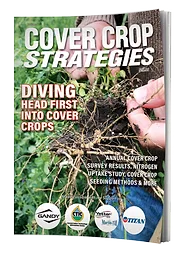
Whether by airplane, spreader or toolbar, interseeding cover crops into cash crops is a trend that appears to be growing in popularity as a way for growers to accommodate weather challenges, increase crop diversity and boost soil health more efficiently. The Cover Crop Benchmark Study released this year by Cover Crop Strategies details some of the first in-depth data available in the ag industry on interseeding practices for U.S. farmers, including equipment utilized and planting timings that work for growers.
Read More

Wrapping Up Planting Warm Season Cover Crops

The prairies of south central Montana are really starting to come to life. Cali Rooney and her husband Tyler have been busy planting all of their warm season cover crops. These particular cover crop varieties must be planted in soil that consistently stays above 50 degrees, ideally. Read more in this article from the Lincoln Journal Star.
Read More

Livestock Grazing on Cover Crops Improves Soil Health

In 2016, Shawn Freeland to make a difficult decision. The 45-year-old Caputa, S.D., rancher attended a Grassland Coalition Grazing School. In addition to reducing his stocking density on rangeland, he no-till drilled a diverse cover crop mix on irrigated hay acres. Read more in this article from Farm Forum (Aberdeen, SD).
Read More

Haying & Grazing Prevented Planting Acres

There is a lot of interest in haying or grazing a cover crop planted on prevented planting acres. This is mostly the result of projected lower yielding 2020 hay production due to a late freeze and current dry conditions. Read more in this article from AgWeek.
Read More

New Factors Influence Cover Crop Choices

In the midst of a renaissance in soil health, researchers, agronomists and extension personnel have been pushing the message that everything a grower does in a field is connected to everything else. Fertility is linked to planting depth, just as mycorrhizal fungi are connected to weed management. Read more in this article from Country Guide.
Read More
NNTC_Logo_2026_4c_Outlined.png

The National No-Tillage Conference returns January 12-15, 2027! Build and refine your no-till system with dozens of new ideas and connections at the 35th Annual National No-Tillage Conference in Indianapolis, Jan. 12-15, 2027. Experience an energizing 4-day agenda featuring inspiring general session speakers, expert-led No-Till Classrooms and collaborative No-Till Roundtables. Plus, Certified Crop Adviser credits will be offered.

Learn More

Top Articles

Must Read Free Eguides

Download these helpful knowledge building tools

View More

Get all things Cover Crop all the time!

Start Your Membership
Top Directory Listings