Editors' Picks

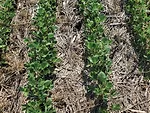
Using Cover Crops as Forage for Livestock

There are costs associated with establishment and termination of cover crops, and oftentimes the economic returns are slowly recaptured, if measurable at all. One way to quickly recoup the cost of cover crops is to use them as an annual forage for livestock. Read more in this article from Hay & Forage Grower.
Read More

Carbon Markets 101

To boil it down, a farm business or forest owner that grows crops or owns trees that remove carbon dioxide from the atmosphere and return it to the soil can be paid by an electricity generator, manufacturing, or consumer product business that emits carbon dioxide into the atmosphere. The transaction is a method of offsetting what we know of as “greenhouse gas emissions.” Read more in this article from the Messenger-Inquirer (Owensboro, KY).
Read More
Seeding Covers

Most Cover Crops Seeded in Fall, Winter

The second annual Cover Crop Strategies Cover Crop Benchmark Study also found that drilling and broadcasting are the two most common cover crop seeding methods.
With so much to be done during fall harvest time and over the winter, 85% of growers are also seeding cover crops during this time frame. That is what the results of the second annual Cover Crop Strategies Cover Crop Benchmark Study found to be the case.
Read More

Burning Down Covers Before Planting

As corn and soybean planting approaches, a few best management practices for pre-plant burndown herbicide programs should be considered. John Wallace, a Penn State Extension weed management specialist, says burndown programs are most successful when applied in weather conditions that ensure targeted weeds and cover crops are actively growing (day temperatures above 55 degrees, and above 40 degrees at night). Read more in this article from Lancaster Farming.
Read More

Rethinking Cropland Management with Planting Green

Peter Sexton, associate professor and South Dakota State University Extension sustainable cropping systems specialist at the SDSU Southeast Research Farm, has found that planting green has water quality benefits. Read more in this article from the South Dakota Soil Health Coalition.
Read More

What Farmers Should Know About Selling Carbon Credits

Agricultural carbon markets exist through privately and publicly owned companies with aim to reduce carbon emissions through trade of carbon units sequestered at the farm level. The sale of carbon credits presents an opportunity for farmers to receive financial benefits from changing to more environmentally beneficial agricultural practices, although carbon prices may not currently be high enough to cover the cost of switching practices. Read more in this article from Wisconsin State Farmer.
Read More

Finalize Forage Grazing Plans

This is the time for finalizing your forage grazing plans. Whether growing small grains or cover crops, grazing will be maximized if livestock producers wait until the plants are 4 to 8 inches tall before starting the grazing process. Read more in this article from the North Platte Telegraph (North Platte, NE).
Read More
NNTC_Logo_2026_4c_Outlined.png

The National No-Tillage Conference returns January 12-15, 2027! Build and refine your no-till system with dozens of new ideas and connections at the 35th Annual National No-Tillage Conference in Indianapolis, Jan. 12-15, 2027. Experience an energizing 4-day agenda featuring inspiring general session speakers, expert-led No-Till Classrooms and collaborative No-Till Roundtables. Plus, Certified Crop Adviser credits will be offered.

Learn More
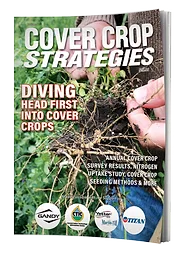
Top Articles

Must Read Free Eguides

Download these helpful knowledge building tools

View More
Get all things Cover Crop all the time!

Start Your Membership
Top Directory Listings