Editors' Picks

Grass Cover Crops Are the Most Common Cover Crops Used Before Planting

Cover crops—which are typically added to a crop rotation in between two commodity or forage crops—provide living, seasonal soil cover with a variety of on-farm benefits, such as increased soil moisture capacity, improved nutrient cycling, and weed suppression. Cover crops can also provide public benefits by reducing sediment loss, nutrient runoff, and leaching; reducing flooding; and storing carbon in the soil. Read more in this article from USDA Economic Research Service.
Read More

Cover Crops Bring Advantages to Dairies

Cover crops can be a beneficial addition to most dairy farms. They can provide additional forage options, reduce erosion and runoff, improve soil health and allow for more time to apply manure. Read more in this article from Farm & Dairy.
Read More

Indiana Sets New State Cover Crop Record

According to a recent conservation survey, Indiana farmers have set a conservation record this year by planting an estimated 1.5 million acres of overwinter living covers, the largest amount ever recorded by an Indiana Conservation Partnership survey. Read more in this article from WBIW.
Read More

Rotational Crops After Potatoes Improve Soil Health

"Instead of controlling one disease versus multiple, we do the integrated way by using different crops as a nutrient input and also as a disease suppression strategy,” says Jay Hao, Professor of Plant Pathology for the University of Maine. Read more in this article from WAGM.
Read More

Minnesota Grower Turns to Covers to Battle Erosion

The emergence of no-till and cover crop farming practices on farms like Sheldon Luehmann’s near Altura might mean that farmers might soon be able to turn their plowshares into something else entirely. Although young, Luehmann already is confident enough to begin experimenting with unconventional techniques. Read more in this article from the Winona Post (Winona, Minnesota).
Read More
Cover Crop Standpoint

‘Getting Paid’ to Help Offset Climate Change

The carbon market system is a Wild West right now, says no-tiller Trey Hill. But carbon-smart farming and balancing carbon-to-nitrogen ratios in your fields starts with cover crops.
I think folks who are into the cover crop movement and no-till are really starting to think about sustainability a little differently.  


Read More
Lemons.jpg

Cover Crops Build Strong Orchards That Can Withstand Droughts

At the Petty Ranch in southern California, where it sometimes rains less than 5 inches per year, covers are an effective line of defense against dryness.
Lemons and avocados aren’t your typical cash crops accompanying cover crops. But Chris Sayer’s family successfully uses covers in their lemon and avocado orchards on Petty Ranch in Saticoy, Cal., which they’ve owned for 130 years. 


Read More
closeup-rye.jpg

‘Zone Approach’ with Cover Crops Boosts Sustainability at Vegetable Farm

On his Minnesota vegetable farm, Ryan Pesch uses cover crops to lighten and enrich heavy soil and improve production prospects.
Building soil nutrients is one of the major benefits of using cover crops, and it’s the benefit of choice for Ryan Pesch and his family. Pesch has used cover crops on his farm since he and his family started Lida Farm in 2004.


Read More
NNTC_Logo_2026_4c_Outlined.png

The National No-Tillage Conference returns January 12-15, 2027! Build and refine your no-till system with dozens of new ideas and connections at the 35th Annual National No-Tillage Conference in Indianapolis, Jan. 12-15, 2027. Experience an energizing 4-day agenda featuring inspiring general session speakers, expert-led No-Till Classrooms and collaborative No-Till Roundtables. Plus, Certified Crop Adviser credits will be offered.

Learn More
Top Articles

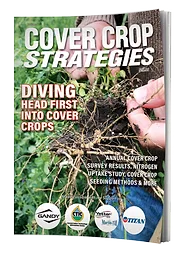
Must Read Free Eguides

Download these helpful knowledge building tools

View More
Get all things Cover Crop all the time!

Start Your Membership
Top Directory Listings