


News

lodged-cover-crop.jpg

Cover Crop Termination Tradeoffs

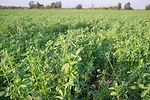
A fall-planted cereal rye, wheat, or triticale cover crop can have both positive and negative impacts, for example by tying up nitrogen, reducing soil moisture prior to planting, increasing insect pressure, reducing weed pressure, reducing soil erosion and allelopathy. These tips from the University of Nebraska will share tradeoffs to help you better assess cover crop termination timing for your operation and risk level. 


Read More
Ramsier_main

Cover Crops Effective at Reducing Nitrate Concentrations in Tile-Drained Water, Study Shows

Cover crops were almost as effective as restored prairie at reducing nitrate concentrations in tile-drained water, according to recent research at Iowa State University.This was one of the key findings from a study led by Marshall McDaniel, associate professor of agronomy at Iowa State. The project was designed to better understand how the quantity and quality of tile drainage water impacts in-stream potential for nutrient enrichment, leading to growth of algae and depletion of vital oxygen in aquatic ecosystems.


Read More
Dirt

Timing Cover Crop Termination to Meet Your Residue Goals

Cover crops are used to address multiple resource concerns and can provide a wide range of conservation benefits including reduced soil erosion, scavenged residual soil nitrogen, weed suppression, and supplemental livestock forage. The carbon to nitrogen (C:N) ratio of the cover crop determines the durability of the cover crop residue.


Read More
UC cover crop study

Proper Soil Care, Grazing Practices Can Help Manage Drought

South Dakota’s drought is bad and getting worse. And a new, long-range forecast from the National Oceanic and Atmospheric Administration offers little hope for green pastures ahead. West central rancher Dan Rasmussen says the drought is going to hurt, no matter what, but offers advice on how to prepare for the challenge ahead.


Read More
ucanr.jpg

California Study: No-tillage Sorghum and Garbanzo Yields Match or Exceed Standard Tillage Yields

To meet the requirements of California's Sustainable Groundwater Management Act, there is a critical need for crop production strategies with less reliance on irrigation from surface and groundwater sources. One strategy for improving agricultural water use efficiency is reducing tillage and maintaining residues on the soil surface. This study evaluates high residue no-till versus standard tillage in the San Joaquin Valley with and without cover crops on the yields of two crops, garbanzo and sorghum, for 4 years. 


Read More
IMG_20181018_131135683.jpeg

Ohio State Offers Tips for Spring Manure Application

Last fall was not favorable for manure application to farm fields. Thus, many producers are interested in spring application with an eye on capturing the nitrogen contained in the manure to reduce the need for purchased nitrogen.
Read More

Amid Ukraine War Concerns, Purdue Ag Confidence Indicator Slips

Ag producers’ sentiment weakened in March as the Ag Economy Barometer fell 12 points below February’s reading, making it the weakest sentiment reading since May 2020. Concern about the impact of rising input prices and input availability on their farming operations was paramount in the minds of producers responding to the March survey.
Read More
corn in covers

Corn Upside and Downside Price Scenarios

The Russian invasion of Ukraine has created uncertainty in global grain exports. This uncertainty has and likely will continue to result in short-term opportunity for US corn exports. This article conducts scenario analysis around US corn prices, examining plausible “what-if” events and predicting possible outcomes. Scenario analysis can provide a better understanding of upside opportunities as well as downside risks. A better understanding of the potential outcomes of these events can help in planning and managing should they occur.


Read More
NNTC_Logo_2026_4c_Outlined.png

The National No-Tillage Conference returns January 12-15, 2027! Build and refine your no-till system with dozens of new ideas and connections at the 35th Annual National No-Tillage Conference in Indianapolis, Jan. 12-15, 2027. Experience an energizing 4-day agenda featuring inspiring general session speakers, expert-led No-Till Classrooms and collaborative No-Till Roundtables. Plus, Certified Crop Adviser credits will be offered.

Learn More

Top Articles

Must Read Free Eguides

Download these helpful knowledge building tools

View More

Get all things Cover Crop all the time!

Start Your Membership
Top Directory Listings