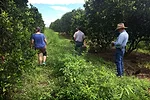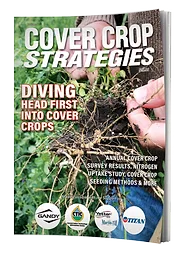

Planting cover crops instead of fallowing fields may boost soil health, but farmers shouldn’t expect their efforts to work immediately. Cover crops also increase costs. That was the takeaway from a workshop presented by the Southwestern Colorado Research Center and attended by more than 60 farmers and ranchers Monday in Dove Creek, Utah, at the Public Service Center. Read more about farmers' experiences in this article from The Journal (Cortez, CO).
Using cover crops as forage for livestock is a profitable and effective way to make cover crops a win-win situation. Pennsylvania cover crop expert Steve Groff welcomes guest speaker Monte Bottens, a California crop consultant, in this week’s podcast to discuss how to choose the best cover crop mixes for grazing, how to scale regenerative agriculture, how cash cropping can mesh with grazing livestock, and more.
Although cover crops are becoming more mainstream, there are still those growers out there who are resistant to the idea, according to Pennsylvania cover crop expert Steve Groff. This podcast shares tips on how to have conversations with your neighbors and other farmers about using cover crops.
You don’t typically hear farmers saying they want to attract bugs to their farm, but that’s what a unique conservation project in California’s Sacramento Valley is doing – determining whether cover crops can attract more at-risk native pollinators, like monarch butterflies, in addition to insects that serve as pest control, like ladybugs. The project came about thanks to a $3-million monarch and pollinator recovery bill (AB 2421) designed to establish habitat restoration projects for important pollinator species facing steep population losses. Find out more in this blog post from the Environmental Defense Fund.
For the last couple of decades, a tiny insect called the Asian citrus psyllid has fed on the stems and leaves of the orange trees in Florida, infecting them with bacteria that cause a lethal disease called citrus greening. After years of seeking remedies—everything from antibiotics to GMOs to psyllid-sniffing dogs—with little success, Florida’s embattled citrus growers have discovered a new tool, thanks to the work of researchers at the University of Florida: planting cover crops amidst the orange groves.
Learn more about ryegrass and the pros and cons of using this cold weather crop as a cover crop. Find out the best time to plant rye grass, why ryegrass is an excellent choice for preventing soil erosion, and why timing of ryegrass termination is so critical.
Careful manure management is a principle of farm profitability and environmental stewardship. Applying manure to land that has a cover crop is another practice that can help with nitrogen management.
Cover crops can be used to benefit multiple aspects of your operation. However, in order to see notable improvement, specific areas you want to progress must be outlined so that a plan of action can be formed accordingly. As we get through the start of the New Year, now is a good time to set goals for cover crop performance and develop a strategic plan to achieve them.
You have read all the articles on soil health and you know how important it is. You have decided you want to try and plant cover crops, but where do you go to get started?
Farmers throughout history have taken advantage of off-season plant growth to enhance their next year’s crops. These plants, called cover crops, are beneficial in many ways, including protection against weed infestation and soil erosion, as well as feed for farm animals.
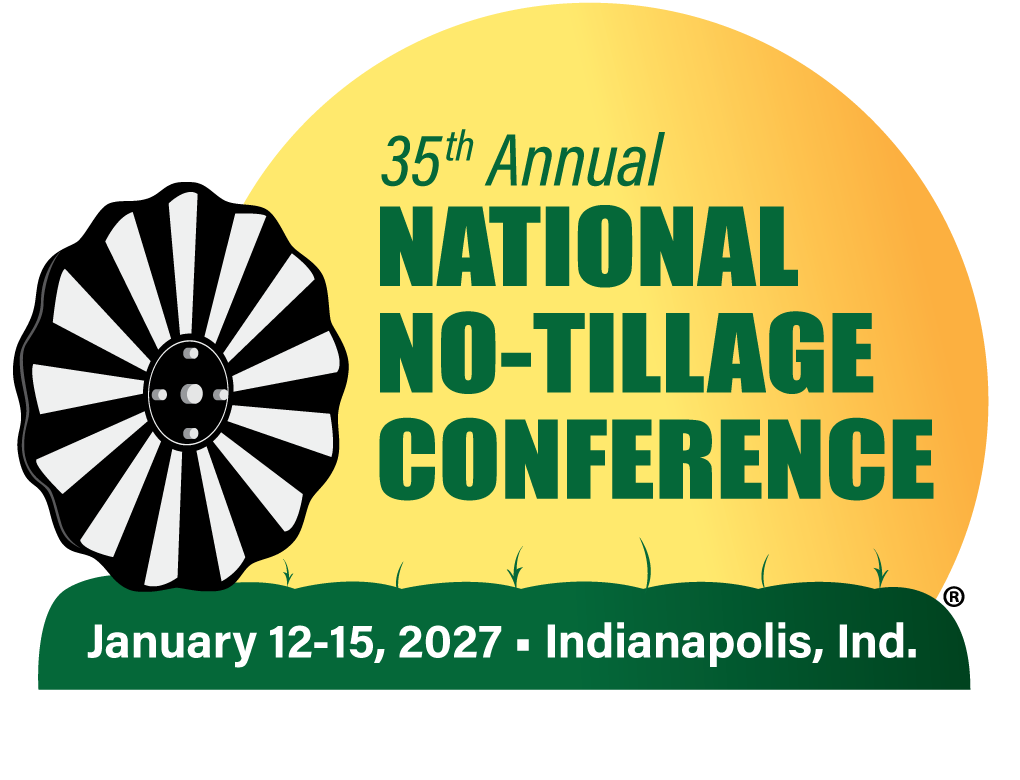
The National No-Tillage Conference returns January 12-15, 2027!Build and refine your no-till system with dozens of new ideas and connections at the 35th Annual National No-Tillage Conference in Indianapolis, Jan. 12-15, 2027. Experience an energizing 4-day agenda featuring inspiring general session speakers, expert-led No-Till Classrooms and collaborative No-Till Roundtables. Plus, Certified Crop Adviser credits will be offered.
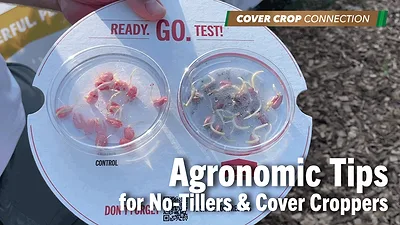
This week we are looking at a clip from Cody Hornaday, a technical agronomist with Koch Agronomic Services, as he explains a few tips that no-tillers and cover croppers should keep in mind for unlocking phosphorus in their soils.

Family Owned since 1964 – Remlinger Manufacturing was founded by Wilbur Remlinger in 1964 and the family tradition continues today with Wilbur’s grandson being the current CEO/President. Although the business has expanded and diversified, family remains a core value to the company and is evident in the company culture.
Made in USA – Remlinger Manufacturing is proudly located in Kalida, Ohio. We have dealers located across the US and Canada to conveniently serve our customers.
Quality Driven – With over 60 years of producing farm equipment, we continue our tradition of manufacturing high quality attachments and products to serve farmers around the globe.
Byron Seeds LLC is a team of individuals who have a passion for high energy forages, cover crops, and proper farming techniques. Byron personnel seek to understand our clients’ goals so that we may provide the best environment for our clients’ success through research, education, support, and...
Our years of experience and network of dealers make us the ideal choice for your mowing, no-till and horse drawn equipment needs. Use our Dealer Locator to contact your nearest I&J dealer today.