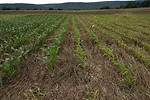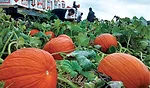
The study looked a pumpkin plots in Kansas, where the Halloween staple is frequently grown in rotation following soybeans, and are a staple of agritourism, according to the study published in the Soil Science Society of America Journal.
Earlier this season, a lack of soil moisture across much of the state raised concerns about the potential for successful cover crop establishment this fall. Most areas still need more moisture to recharge the soil profile but recent rains have improved the moisture status overall. This has also improved the likelihood for successful establishment of a cereal rye cover crop this fall. Read more in this article from University of Minnesota Extension.
Now is the time to make plans for cover crop planting if you have not already done so. There are several cover crop species that are often talked about, however, cereal rye, oats and radish are the most commonly used cover crops. Read more in this article from Iowa State University.
Cereal rye ahead of soybean is not nearly as problematic. While planting green may not be advised for beginning cover crop users, more experienced cover crop users have planted soybean into green cereal rye. Read more in this article from Farm Forum.
In this video from the Sustainable Agriculture Research & Education program, Larry Thompson, a grower from Damascus, Ore., farms 120 acres of 30-40 organic crops. The operation has been using covers since the 1960s to improve soil tilth.
A fall-planted cereal rye cover crop can have both positive and negative impacts, for example by tying up nitrogen, reducing soil moisture prior to planting, increasing insect pressure, reducing weed pressure, reducing soil erosion and allelopathy. The spring rains in 2021 and warming soil temperatures are encouraging cereal rye and wheat cover crops to take off. Read more in this article from University of Nebraska Extension.
Cover crops can serve as a useful tool of an integrated weed management program. Research at the University of Nebraska has shown that cover crops such as cereal rye can provide good control of winter annual weeds and other troublesome species like horseweed, and also provide early-season suppression of summer annual weeds like waterhemp.
On paper, adding a cover crop to a farming production system looks simple enough: plant a small grain such as cereal rye as soon as the cash crop harvest is done; let it grow, then terminate it prior to planting in the spring. But farmers and agronomists know it’s not that simple. Read more in this article from Ohio's Country Journal.
An idea that started with the curiosity of an enterprising south-central Kentucky farmer is showing promise as another crop for Kentucky small grain producers, as well as a reliable source of Kentucky-grown cereal rye for bourbon distillers, bakers and millers. In a state long recognized for its progressive farmers, the Halcomb family of Walnut Grove Farms in Logan County are known as some of the most innovative. Read more in this article from the Sentinel-Echo (London, KY).
Many farmers planted a full season cover crop on their prevented planting acres or are out there now planting a winter annual, like cereal rye. This is a great management approach because you’ve either managed water in those fields similar to what you would have done with a cash crop or you will be managing water next spring with cereal rye planted this fall. Read more in this article from AgWeek.
The National No-Tillage Conference returns January 12-15, 2027!Build and refine your no-till system with dozens of new ideas and connections at the 35th Annual National No-Tillage Conference in Indianapolis, Jan. 12-15, 2027. Experience an energizing 4-day agenda featuring inspiring general session speakers, expert-led No-Till Classrooms and collaborative No-Till Roundtables. Plus, Certified Crop Adviser credits will be offered.
In our latest edition of the No-Till Farmer Newsletter, you may have seen our No-Till Innovator Special Report which includes tips and advice from expert no-tillers, agronomists and researchers.
Family Owned since 1964 – Remlinger Manufacturing was founded by Wilbur Remlinger in 1964 and the family tradition continues today with Wilbur’s grandson being the current CEO/President. Although the business has expanded and diversified, family remains a core value to the company and is evident in the company culture.
Made in USA – Remlinger Manufacturing is proudly located in Kalida, Ohio. We have dealers located across the US and Canada to conveniently serve our customers.
Quality Driven – With over 60 years of producing farm equipment, we continue our tradition of manufacturing high quality attachments and products to serve farmers around the globe.
Byron Seeds LLC is a team of individuals who have a passion for high energy forages, cover crops, and proper farming techniques. Byron personnel seek to understand our clients’ goals so that we may provide the best environment for our clients’ success through research, education, support, and...
Our years of experience and network of dealers make us the ideal choice for your mowing, no-till and horse drawn equipment needs. Use our Dealer Locator to contact your nearest I&J dealer today.