
A biological product has to earn its place in a crop program. Farmers and their advisers need clear answers: What does the product do? How does it fit in the operation?
What evidence supports the investment?
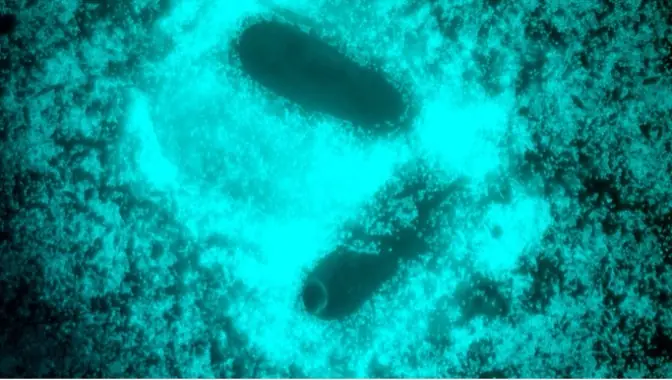
At ENAI, we start with a relationship that already exists in nature: the partnership between plants and the microbes that live within them. These microbes, called endophytes, offer a powerful starting point for developing biological products. The location of these microbes within the plant gives them an opportunity to interact closely with the crop, establishing where in the plant they can be most useful, and then respond quickly as the plant develops.
Turning that opportunity into a dependable agricultural product requires discipline at four stages: selecting the right strain, testing it for consistent performance, formulating it to survive the
supply chain, and delivering it to the right place at the right time. ENAI’s approach connects the biology of endophytes to defined crop needs, then tests whether that biology creates value in the field.
What are endophytes
Endophytes are microorganisms capable of living within plant tissues without causing disease. They can include bacteria and fungi. Some establish in the space between plant cells; others form closer associations within specific tissues; yet others make their way into the plant cell itself.
Different microbes occupy different niches, and their effects depend on the strain, the plant, and the growing conditions.
The endophytes we select for ENAI products are specific strains chosen for useful functions, such as helping protect roots from pathogen threats or supporting water and nutrient uptake. Being an endophyte is the starting point. The benefit must be demonstrated for the particular strain and intended use.
Plants are active participants in these relationships. They regulate microbial populations by controlling which organisms enter, where they move within plant tissues, and how quickly they grow. Plants monitor these interactions through molecular signals and through the effects microbes have on plant performance.
Plants are in control of the interaction. That distinction matters. Rather than a plant acting as merely a passive surface for a typical pesticide or fertilizer application, plants and their applied endophytes represent a living relationship.
Why location changes the opportunity
A plant supports a microbial community in the surrounding soil, on its surfaces, and within its tissues. Those locations expose microbes to different conditions. Organisms on exposed surfaces or in the soil may face drying, sunlight, rainfall, and competition. Establishment within plant tissue can provide a more protected habitat and provide for close contact with the crop.
Beyond improving growing conditions for a useful endophyte, that localization creates several possibilities to improve its efficacy. A bacterium may accumulate near a vulnerable area of the root. Close contact with the plant may enable an endophyte to respond more quickly to changes in the plant. A fungus may extend threads beyond the root and increase its effective reach into the surrounding environment.
Beneficial microbes can influence plant defenses against pathogens at the molecular level. One example is induced systemic resistance, often called priming: microbial signals prepare the plant to respond to a later pathogen threat. When that threat arrives, a primed plant may respond more quickly, strongly, and specifically. Because this response depends on the microbial strain, plant, and growing conditions, it must be demonstrated rather than assumed for every biological.
PathoShield: putting useful biology where it needs to be
Soilborne pathogens causing seedling disease are quite diverse including Fusarium, Rhizoctonia, and Pythium. While all tend to be present in every field, which pathogen species presents the greatest challenge in any particular field or season varies depending on many factors such as soil type and weather conditions.
The challenge in protecting plants from these pathogens is that all plant roots have natural openings and vulnerable areas: near growing tips, where lateral roots emerge, and other areas where physical damage occurs. These areas create easy access points for pathogens to enter.
In research on PathoShield, our seed-applied biofungicide, we found that its bacterial active ingredient, Kosakonia cowanii, accumulates at sites associated with pathogen entry. Fluorescence microscopy showed the bacteria on root surfaces, with especially high concentrations near root tips and emerging lateral roots. This location may give PathoShield an advantage by placing the bacteria near vulnerable tissue before pathogens arrive. The bacteria can also produce a biofilm over these openings, creating a physical barrier that may help limit pathogen entry.


Left to right: Emerging lateral root; Root tip; Root surface.
PathoShield bacteria appear green in these fluorescence images with plant tissue appearing red. The images illustrate bacterial location near root structures known to be pathogen entry sites.
Visual evidence of activity (difficult for microscopic organisms) makes the mechanism tangible for an agronomist or seed partner. By studying where the active organism establishes, alongside what the product does, ENAI is able to give a grower confidence in technology that may be unfamiliar or hesitant to adopt.
Nemora: extending nematode protection as roots grow
Soybean cyst nematodes only move a few inches over the course of their lives. As soybean roots grow through new areas of soil, that growth brings new root tissue into striking distance of these pests. This creates a challenge for any nematicide. Infection occurs not just over a long time period but also a wide physical area. Because of this broad infection window, protection in the limited area around the planted seed has limited potential.
Nemora illustrates the potential of an endophytic bacterial approach. Microscopy of its active bacterial strain, Pseudomonas oryzihabitans, showed that the bacteria establish and multiply within the plant after seed application, appearing in newly formed tissues beyond the taproot. Colonization was especially strong in root hairs, and bacterial cells were also observed in the area outside the root. Together, these findings suggest that the organism can remain associated with the expanding root system while also moving into the surroundings. We have also found that Nemora bacteria are attracted to and gather around nematode eggs. Aligned with that finding, Nemora treatment significantly reduced egg hatching.
As soybean roots grow through the soil, Nemora bacteria can grow within the plant and move into the rhizosphere. There, the cells are attracted to nematode eggs and reduce hatching, lowering the nematode population over time. This localized spreading and mobility distinguishes the biological approach from a treatment confined to the immediate area around the planted seed: Nemora’s endophytic nature may help the active organism remain associated with the expanding root system and interfere with the pest’s life cycle where roots and eggs meet.


Left: Plant root with Nemora colonization of soybean root hairs with free-living cells surrounding the root. Bacteria appear green, and plant tissue appears red. The small protrusions from the main root are root hairs. Right: Nemora bacterial swarms swarming soybean cyst nematode eggs. The dark ovals in the center are the nematode eggs. The glowing points of light surrounding the eggs are individual Nemora bacterial cells.
M46: extending the root’s reach for water and nutrients
When farmers hear water stress, they may picture rolled corn leaves and a visibly struggling crop. Yet growth slows before those symptoms become obvious. Plants also use water to move nutrients into the plant, connecting water availability with nutrient acquisition.
The graph below uses a hypothetical Iowa cornfield to illustrate how water availability can limit growth before severe symptoms appear. The bars estimate the percentage of growing days spent at different soil water-holding capacities, while the line shows plant growth rate as a percentage of its maximum at each capacity. In the model, growth declines during a substantial portion of the season, even though widespread leaf rolling does not appear until water-holding capacity falls to roughly 50 to 60 percent. The model is illustrative rather than representative of every field or season, but it reinforces what we have all seen with our own eyes in annual yield contest results. The entries with precisely irrigated fields always outperform the non-irrigated, even in an “ideal” growing year with no obvious water stress.

Water limitation can affect growth before severe symptoms appear. This illustrative model shows percent of days spent at different water holding capacities as bars, and the line shows the relative growth rate at each water holding capacity.
The big question is, “How can we shift the growth rate line so that a plant spends more of the season at a higher growth rate?”
M46 is a product in our portfolio, with three active ingredients, that enhances water and nutrient use efficiency. M46’s fungal active ingredient, Coniochaeta nivea, grows as threadlike structures called hyphae. As an endophyte, these living threads grow within corn roots and then extend out into the surrounding soil environment. In that way, they act like additional root hairs, increasing the root’s effective surface area for accessing water and nutrients. Water and nutrients can then
be more efficiently captured from the surrounding environment, increasing the availability of these essential resources for plant growth during ever-changing growth conditions.

The M46 fungal active ingredient, Coniochaeta nivea, acts as additional corn root hairs. Hyphal threads are in green and corn root cells are in red.
What makes ENAI’s approach different
These examples show three distinct ways endophytes can be useful: delivery of pesticides where they are most needed, active targeting of plant pests, and extending the root’s functional reach. Selecting organisms with those capabilities takes more than just identifying an interesting microbial species from academic research.
ENAI combines proprietary microbial resources with laboratory, greenhouse, and field evaluation. This research draws on a library of more than 36,000 purified microbial isolates, more than 7,000 global field trials, and use across 15 million acres on three continents. Although these numbers are impressive collectively, each product still needs its own evidence.
AI-enabled discovery supports that process. Our scientific teams combine genomic information from the microbial library, knowledge of microbial communities within plants, and years of experimental performance data to identify candidates for testing. Predictions help prioritize the work, laboratory and greenhouse studies investigate the biology, and rigorous field testing determines whether candidates perform across diverse agricultural conditions.
During that field testing, our formulations team is optimizing the final product. Farmers and retailers don’t want to re-invent the wheel every time they try a new product. A good biological product needs to fit into their current equipment and agronomic practices. A useful organism must remain viable through those existing supply chains and fit the way seed companies,
retailers, and farmers operate. ENAI’s formulation team connects discovery with those practical requirements.
Field evidence turns a mechanism into a decision
Compelling microscopy can demystify a biological interaction. However, farmers also need to know what happens at harvest.
For each of these products, there is compelling evidence of the possible benefit provided. For PathoShield, we have found a 4.2-bushel-per-acre yield uplift and a 78 percent win rate across trials conducted from 2022-2025. For Nemora, we have observed a 2.2-bushel-per-acre yield uplift and a 77 percent win rate across 11 locations with confirmed SCN pressure in trials conducted from 2021-2023. For M46, we have found a 3.5-bushel-per-acre yield uplift and a 75 percent win rate across our 2025 trials. Every year and field is different, but at the cost to farmers and current grain prices, there is a strong case for a nice return on investment. As the Nemora data shows under confirmed SCN pressure, that probability improves when a farmer considers the growing conditions they are facing and chooses a product accordingly.
Aggregated results across a wide geography are useful, but farmers need local context before making a product decision. From that larger dataset, a farmer needs to know: What was the treatment compared to? How similar were the crops, soils, pest pressure, and management to my fields? How consistent was the response? What does the product cost and current crop price mean for the potential return? ENAI’s large field datasets allow farmers to focus on results from conditions similar to their own while retaining enough observations to make an informed decision. Our broad portfolio also allows farmers and retailers to select products for the specific production challenges faced.
That is how biologicals earn trust: a clear mechanism, relevant performance data, and a practical fit with the existing crop program. ENAI’s products are designed to complement the genetics, crop protection tools, and agronomic practices farmers already use.
Explore what endophytes could bring to your crop program
The close association between endophytes and crop plants creates distinct product-development opportunities. The examples from our research show why that relationship matters and why different organisms must be selected for different jobs. By complementing existing fertilizers and crop-protection products, endophyte-based biologicals may help address performance gaps under changing field conditions.
At ENAI, our goal is simple: develop evidence-backed products that farmers can use with confidence to protect crop potential.