We are still combing through all the great content we captured at Farm Progress Show this year and this week we are looking at a clip from Cody Hornaday, a technical agronomist with Koch Agronomic Services, as he explains a few tips that no-tillers and cover croppers should keep in mind for unlocking phosphorus in their soils.
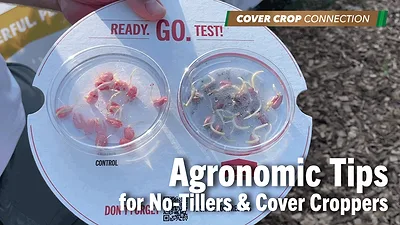
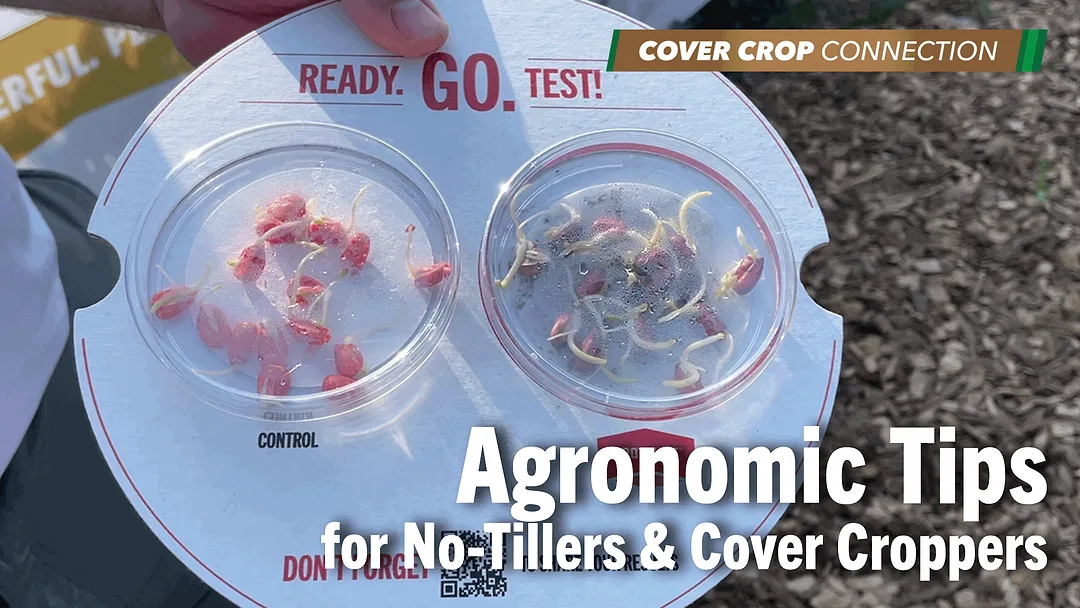
“One of the things I wanted to show you real quick right out of the gate, both the products we're really highlighting here today focus primarily on early season advantages. And so naturally this time of year, some of the differences get a little harder to see, but this is just a great example of what Protivate, which is a planter box added nutritional product can really do for things. And when we think about potentially utilizing no-till, we think maybe soils could be a little bit cooler, tougher conditions. Protovate really shines in those types of environments. As you can kind of see here, you get earlier emergence and you also get more even emergence. And so Protovate really does a nice job providing that through all of the nutritional benefits that you get when using it. As a quick side note, it also comes available with graphite, so it can be a taut graphite replacement. ”
“So basically you're just getting more out of something you're already doing. That's a pretty common concept when it comes to this product. So yeah, when we move to our next product, this is phosphorus. So this is a nutrient enhancement product. It is a novel enzyme being applied to unlock organic phosphorus. There's a whole lot of stuff in this space, this market. You hear a lot about unlocking and freeing up and things that are tied up. This enzyme is actually a little bit different than a lot of things on the market in that it's focused on organic material. It's breaking down that organic phosphorus that would not have otherwise been available to plants. And so this really has a unique place in the market and we see a lot of benefit from those early season applications. You see here, we usually focus on somewhere from around planting all the way up to side dress.”
“And in those scenarios, a lot of times, as you see here on our bottom graph, we're seeing the average across several trials now is about 5.2 bushels per acre. So just freeing up more phosphorus that wouldn't have otherwise been available to your crop. ”
Helpful info as always from the Koch Agronomic Services team. That’s all for this week’s Cover Crop Connection, until next time, I’m Mackane Vogel. Back to you, Noah.