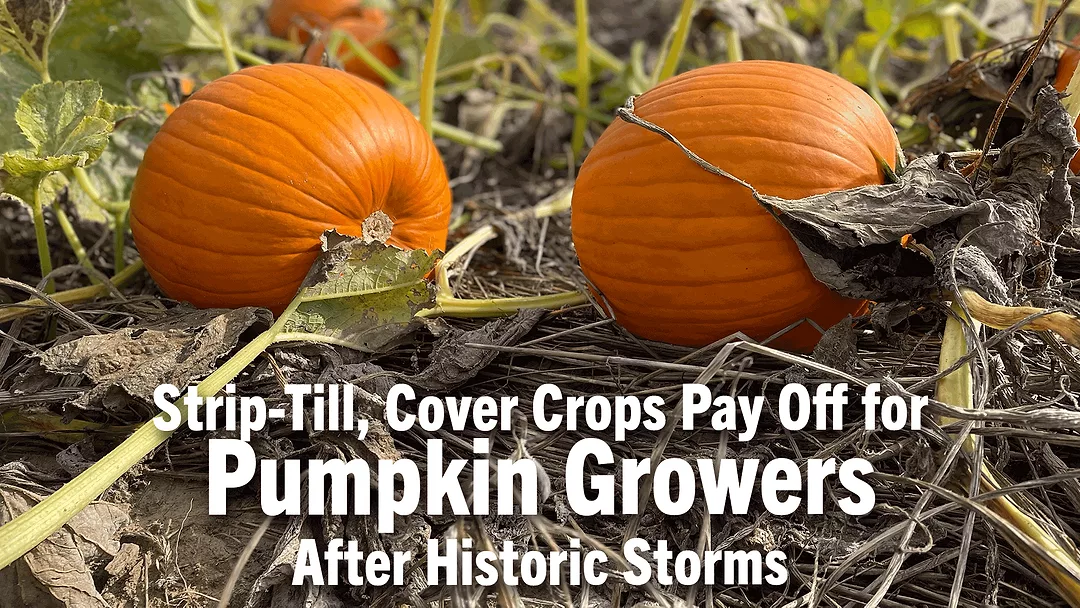
Strip-Till Farmer pays a visit to Basse's Farms in Colgate, Wis., for a look at how strip-till and cover crops are proving to be a winning combination for the pumpkin growers. Blake Basse, who was only 5 years old when Basse's Farms launched its now famous Pumpkin Fest in 1997, came up with an idea in 2024 that would improve how he and his dad, Roger, grew their most prized assets.
“We always had challenges with growing a consistent pumpkin crop with conventional tillage,” Blake says. “We’d get big rains, and we’d watch the pumpkins sit in mud, which is full of diseases and pathogens that essentially break the pumpkins down. There had to be a better way.”
That better way turned out to be adopting strip-till and cover crops. The Basses now plant cereal rye with their grain drill after soybean harvest in October. They let the rye grow until the end of May before terminating it with a roller-crimper. Then they use Yetter 2984 Strip Fresheners on a Yetter 3815 toolbar to make strips about 4.5 inches deep through the rye and plant pumpkins into the seedbed a couple of days later.
“I can’t believe how well it’s worked so far,” Blake says. “It’s helped with disease weed pressure and keeping the pumpkins clean. They’re sitting on the rye mat, so when we pick them there’s barely any dirt on them. That’s wonderful for the customers because the last thing they want to see when they take pumpkins to the car is dirt everywhere.”
In this video, Blake dives further into his system and explains how it helped save their pumpkin crop after a “1,000-year” rain event dumped a foot of rain on their farm in less than a day this past August.