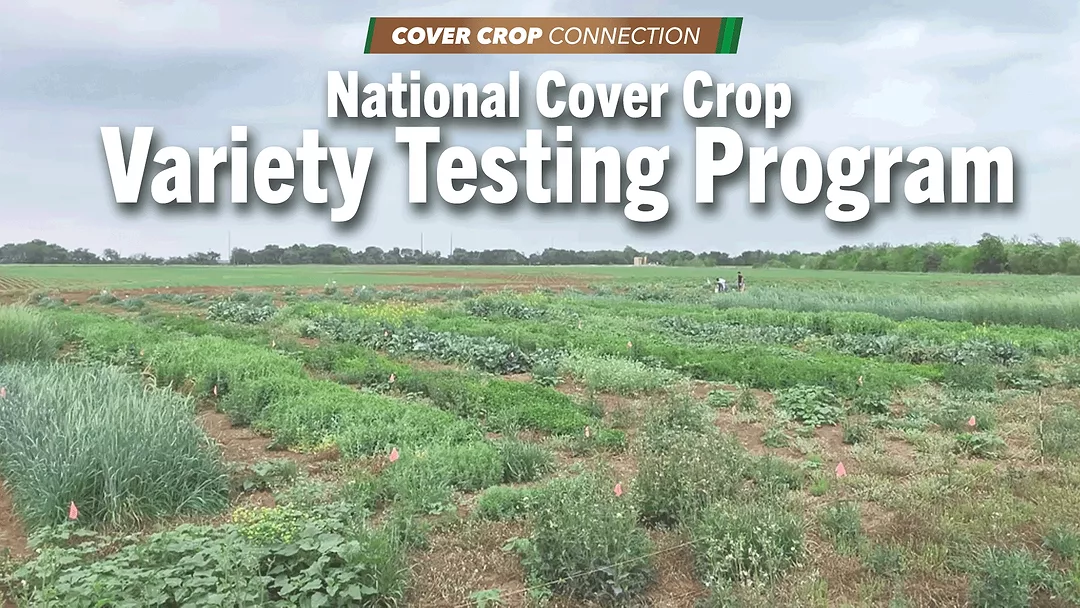
Mackane Vogel here with this week’s cover crop connection. As part of a $10 million effort funded by the USDA, the first National Cover Crop Variety Test Report is being released publicly. The project is led by the University of Missouri’s Center for Regenerative Agriculture and includes data for 25 varieties representing six different cover crop species tested across 12 states to help inform cover crop decision making based on winter hardiness, biomass potential, weed control, and other key cover crop traits. Here’s a clip of Etienne Sutton, Program Manager and Senior Researcher at the Center for Regenerative Agriculture, discussing some more details from the testing program.
“So this is an example from our Vermont site. The evaluation metrics are listed in the top row of the table, and then the species and varieties are along the leftmost column, and the values in the tables are the averages for each variety across those evaluation metrics. You'll want to note that the winter canola and radishes are both lumped together into a brassicas category at the bottom of the tables. and then, in terms of analysis for each site. We analyzed the data to see if there were statistically significant differences across varieties for each species, and where there were significant differences.”
“We indicated this with letters such that any varieties that do not share a letter are indeed statistically different from each other. For example, across winter pea varieties in Vermont there were significant differences. In spring stand survivor, which is marked with an A is a variety bred for winter hardiness in early Greenup, and showed significantly better spring stand than frostmaster, which is marked with a B. The other 3 varieties Wyo Winter, Austrian winter peas and keystone are all marked with both an A and a B, which means that they had intermediate performance and were not significantly different from either survivor or frostmaster.”
If you want to download and review the full report or watch the replay of that webinar unpacking all the details from the report, you can head to the website or the YouTube channel for University of Missouri’s Center for Regenerative Agriculture.