The fallow period between soybean harvest and corn planting in a crop rotation is highly vulnerable to sediment and nutrient losses, but soybean harvest is often so late that there isn’t enough time to reliably establish a cover crop. If a cover crop is established, options are typically limited to cereal rye or winter wheat. For many, the financial risk of a failed cover crop stand outweighs the potential benefits. Read more in this article from Lancaster Farming.
Are you looking for cover crops to fill a fallow period as small grains, snap beans, or other crops are harvested? Extension agronomist Heidi Reed explains that establishing cover crops in summer grants an opportunity to branch out beyond our fall-planted standbys. Read more in this article from Lancaster Farming.
In western Kansas, dryland cropping systems tend to have long fallow periods between cash crops. The original reason behind these systems is to basically “bank” moisture in the soil profile for the next crop, thus reducing the risk of a failure. Read more in this article from the Dodge City Daily Globe (Dodge City, KS).
The National No-Tillage Conference returns January 12-15, 2027!Build and refine your no-till system with dozens of new ideas and connections at the 35th Annual National No-Tillage Conference in Indianapolis, Jan. 12-15, 2027. Experience an energizing 4-day agenda featuring inspiring general session speakers, expert-led No-Till Classrooms and collaborative No-Till Roundtables. Plus, Certified Crop Adviser credits will be offered.
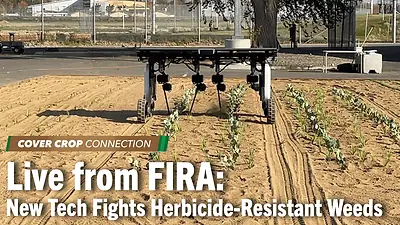
I'm in Yakima, Washington this week at FIRA USA where there's always lots of great ag technology on display. Why don't we go take a look at the newest edition of the Aigen robot. We'll hear from Kenny Lee, the CEO of Aigen.