The Wisconsin Initiative on Climate Change Impacts projects Wisconsin will experience more extreme weather events in the future. This projection may not be surprising, given the State just dealt with a drought in 2023, followed by abundant rainfall and localized flooding events in spring 2024, and is now back into dry conditions this fall.
They say history repeats itself—it sure seems that way when it comes to the end of the year and global temperature records. But cover crops and no-till could be part of the solution.
Nutrient runoff from agricultural production is a significant source of water pollution in the U.S., and climate change that produces extreme weather events is likely to exacerbate the problem. A new study from the University of Illinois Urbana-Champaign looks at how extreme rainfall impacts runoff and suggests possible mitigation strategies.
The USDA is providing additional flexibilities for producers to file on acres with failed crops or crops that were prevented from planting because of extreme weather events. USDA’s Farm Service Agency (FSA) is adding these flexibilities for Notice of Loss on both insured and uninsured crops to enable Service Centers to best assist producers.
The National No-Tillage Conference returns January 12-15, 2027!Build and refine your no-till system with dozens of new ideas and connections at the 35th Annual National No-Tillage Conference in Indianapolis, Jan. 12-15, 2027. Experience an energizing 4-day agenda featuring inspiring general session speakers, expert-led No-Till Classrooms and collaborative No-Till Roundtables. Plus, Certified Crop Adviser credits will be offered.
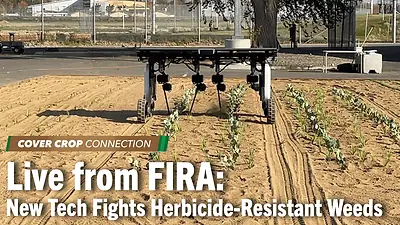
I'm in Yakima, Washington this week at FIRA USA where there's always lots of great ag technology on display. Why don't we go take a look at the newest edition of the Aigen robot. We'll hear from Kenny Lee, the CEO of Aigen.