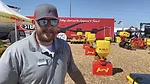

Cameron White, APV-America territory manager, explains how the relatively new company is making a name for itself in the cover crop business. He highlights the many offerings available from APV, including APV's Pneumatic Seeders (PS) series.
Cover crops are seeing popularity increase overseas, from Europe to Asia to Australia to New Zealand, as farmers look for many of the same benefits on their own farms.
When used appropriately, cover crops can improve soil health, boost nutrient cycling, manage soil moisture, suppress weeds, feed livestock and more. But it's important to consider cover crops in the context where they will be growing, says Dwayne Beck, recently-retired director of Dakota Lakes Research Farm.
Some states are doing better than others when it comes to cover crop adoption. Indiana farmers have set a new record for living cover crops planted, at 1.5 million acres, according to a recent conservation survey by the Indiana Conservation Partnership.
One of the reasons growers choose not to use cover crops is because they don’t think the practice is profitable. However, like with any crop, it all comes down to each individual choice by a grower as to whether covers will be successful.
When it comes to convincing growers to use cover crops in their operations, people make all the difference. That’s what the Nature Conservancy discovered in a study they funded that was done by a Purdue University professor and a researcher who had looked at farms in Indiana, Illinois and Iowa counties with relatively high adoption rates of cover crops.
Tenants and landlords should work together to resolve the many logistics around cover crops, including the number of acres planted, expenses, profits and other issues.
Statistics show that cover crop adoption is on the rise across the U.S. There was a 50% increase in the amount of land on which farmers planted cover crops between 2012 and 2017, according to the USDA’s 2017 Census of Agriculture.
Conservation agriculture. Regenerative agriculture. Sustainable agriculture. Resilient agriculture. Climate smart farming.
It doesn’t matter what you call it, cover crops are a critical piece of the puzzle when it comes to building soil health and environmental stewardship.
The National No-Tillage Conference returns January 12-15, 2027!Build and refine your no-till system with dozens of new ideas and connections at the 35th Annual National No-Tillage Conference in Indianapolis, Jan. 12-15, 2027. Experience an energizing 4-day agenda featuring inspiring general session speakers, expert-led No-Till Classrooms and collaborative No-Till Roundtables. Plus, Certified Crop Adviser credits will be offered.
In our latest edition of the No-Till Farmer Newsletter, you may have seen our No-Till Innovator Special Report which includes tips and advice from expert no-tillers, agronomists and researchers.
Family Owned since 1964 – Remlinger Manufacturing was founded by Wilbur Remlinger in 1964 and the family tradition continues today with Wilbur’s grandson being the current CEO/President. Although the business has expanded and diversified, family remains a core value to the company and is evident in the company culture.
Made in USA – Remlinger Manufacturing is proudly located in Kalida, Ohio. We have dealers located across the US and Canada to conveniently serve our customers.
Quality Driven – With over 60 years of producing farm equipment, we continue our tradition of manufacturing high quality attachments and products to serve farmers around the globe.
Byron Seeds LLC is a team of individuals who have a passion for high energy forages, cover crops, and proper farming techniques. Byron personnel seek to understand our clients’ goals so that we may provide the best environment for our clients’ success through research, education, support, and...
Our years of experience and network of dealers make us the ideal choice for your mowing, no-till and horse drawn equipment needs. Use our Dealer Locator to contact your nearest I&J dealer today.