This past weekend as I was helping my friend weed her small flower garden, I reflected on the many hours of my life I have spent pulling weeds. Before nearly perfecting our weed control program with cover crops in our pumpkin patch, my family and I spent countless hours pulling weeds in the 2- to 3-acre field. Since I couldn’t drive yet, I would wake my Mom up in the morning and ask her to drive me to the farm so I could work in the cool morning hours. Then, in the cooler evenings, the whole family would go out and pull weeds together after my Dad got home from work. I quickly developed a strong distaste for redroot pigweed, lambsquarter, velvetleaf, thistles and especially waterhemp.
Thankfully, during our 13 years of growing pumpkins in northwestern Illinois, our weed control program improved significantly and my sister and I were able to pursue more typical summer break activities. Since most of the weeds we dealt with were broadleaves and pumpkins are too, herbicide options were extremely limited. The first year, we no-tilled the pumpkins into a sod pasture after spraying a burndown, and weed pressure was fairly minimal. However, we quickly ran out of sod to plant into, and more or less tried to replicate the success we had in sod with cover crops.
After several years of tweaking our cover crop methods and regularly rotating between several fields that were in a corn and soybean rotation, we realized cereal rye was the best fit for our system. Even that had some learning curves, though.
One year, we struggled to keep the planter in the ground. The cereal rye had been planted very heavily, and we did not run the row cleaners and down pressure aggressively enough considering the light weight of the planter and the hard ground due to drought. Some seeds didn’t make it in the furrow; rather, they fell through the rye mat and sat on top of the soil. Some seeds didn’t even make it through the straw and were quickly eaten by birds and rodents.
The cereal rye method held promise and we continued to pursue it. The thick straw mat clearly helped suppress the weeds and it also kept the pumpkins out of the mud. This helped reduce disease pressure and rot, and saved lots of time. Customers also appreciated not getting their shoes muddy when picking their pumpkins, and not getting their cars muddy when they took the pumpkins home. One year we purchased some pumpkins from another farmer to supplement our crop. They were grown on bare soil and covered in mud. After washing the hundreds of pumpkins we bought, I realized how much labor, time and money the cover crops saved us.
Our most successful cereal rye cover crops were planted in late October or early November with a John Deere 750 no-till drill after the corn or soybeans were harvested. We planted two passes perpendicular to each other, each at 50 pounds per acre, to have an adequate amount of biomass covering every inch of the field during the growing season. The cereal rye would usually put on several inches of growth before dormancy and then take off in the spring.
By the last week in May or the beginning of June, the 5-foot-tall rye would be pollinating during anthesis. Lacking a proper roller crimper, we pulled a 3-point hitch blade behind a John Deere 2240 loader tractor to essentially crimp the rye. The blade snapped the rye stalks while leaving them attached to the roots, thereby killing it but leaving a uniform mat of straw, approximately 1-inch thick.
The straw faded from pale green to yellow in the following weeks. This light color reflected the intense summer sun and kept the soil significantly cooler, which also conserved moisture at a time when rainfall was typically scarce. Pumpkins thrive in well-drained soils but also require 1-2 inches of water a week since the fruit is 90% water, making moisture retention paramount. Several summers, the rain would stop as the fruit was developing and we would start to brainstorm irrigation plans. If the cereal rye hadn’t built healthy soil structure to retain moisture from large rainfall events for several weeks, we may have had to consider irrigation more seriously.
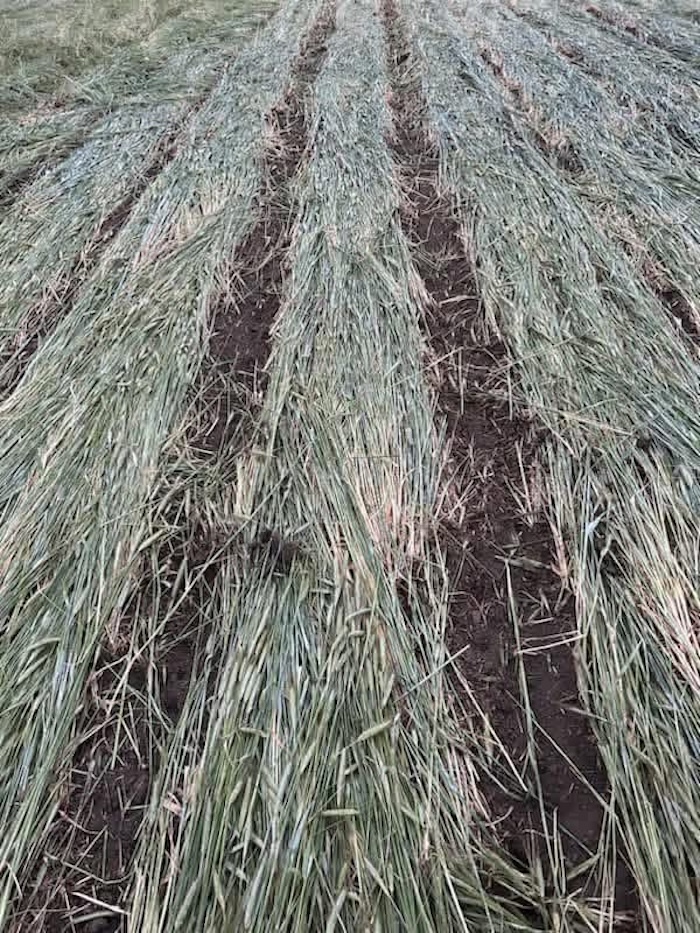 Planting into thick cover crop residue necessitated aggressive row cleaners.
We planted the pumpkins immediately following our improvised rolling technique, using a John Deere 7000 planter with floating row cleaners, heavy duty down pressure springs, twister poly closing wheels, drag chains and several other attachments from Yetter and others. We obtained the desired population of about 5,000 seeds per acre by setting the transmission to the slowest setting, using finger pickup units that had every other finger removed, and planting larger varieties on 60-inch rows. Between planting and emergence, we would spray several herbicides, including a couple of products that offered residual activity against grasses and broadleaves.
This pre-emerge timing was important because it offered residual weed control on the exposed strips that did not benefit from the straw mulch that was present between the rows. If this wasn't accomplished in a timely manner, the pumpkins, which emerge in less than a week in most years, would prevent us from putting down herbicide. We were able to grow pumpkins (mostly) weed free by starting with a clean field at planting, having good weed control in the preceding crops in the rotation, allowing for a long interval between pumpkin crops, growing healthy stands of rye and utilizing several residual herbicides.
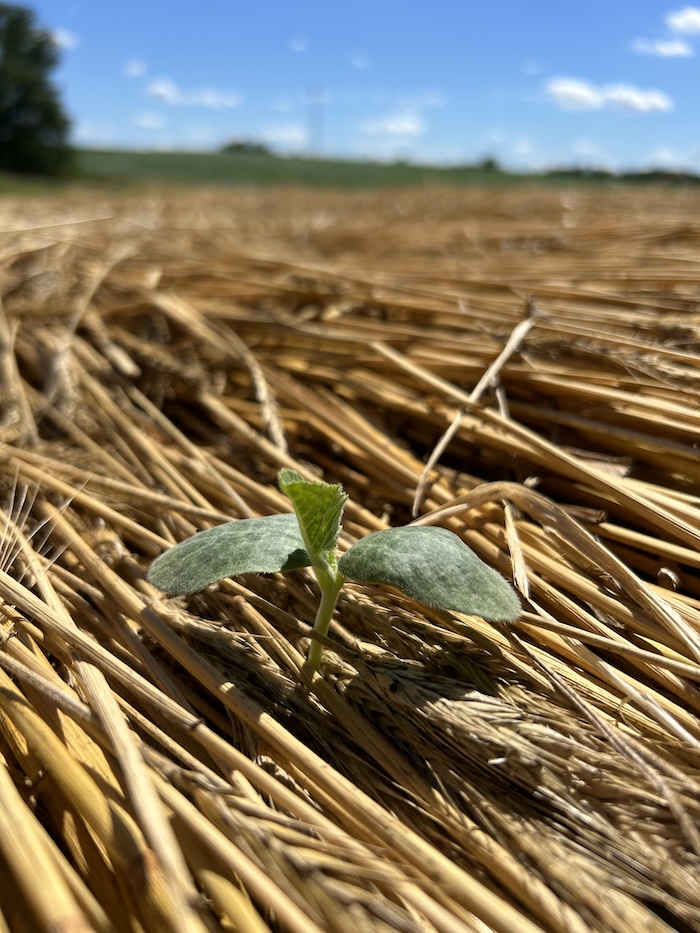 Typically within a week the pumpkins emerge, surrounded by the thick straw mat created by the cereal rye.
Since the pumpkin patch was an ag tourism destination and it had an established social media following, we had a greater ability to communicate with the general public about cover crops, no-till and other soil health practices than a typical farmer may have. This positioned us to help give people a better understanding of farmers’ decision-making processes and the land ethic that drives those decisions. As a fourth generation farmer, I’m inspired to conserve and improve the same land my great-grandpa, grandpa and dad have cared for.