There is a saying that everything that is old becomes new again. Many things come and go in a cycle. I saw evidence of how cover crops were once utilized by farmers on a Facebook page I follow that talks about covers. Someone posted an excerpt from the book Agriculture for Southern Schools by John Frederick Duggar, which was published in 1910, that discussed cover crops at length.
Maryland growers may see a change in the laws around cover crops. Frederick County Delegate Ken Kerr (D) plans to re-introduce a bill that would allow farmers growing cover crops to harvest them. Currently, the state of Maryland pays growers $75 per acre to grow covers, but if they take the money, they aren’t allowed to harvest the crop.
Each crop year is different, and there will be various reasons influencing the decision of what cover crops to use — the amount of biomass you want produced, your preferred method of cover crop termination, weed control, and more. You have to choose cover crops that are best for your operation, the weather, soil conditions and cash crops.
Farming is no different than sports, especially when implementing a new practice like cover planting crops. Out of the many growers I’ve talked to, those who have achieved success have a mentor, or multiple mentors to show them the ropes and get them moving in the right direction.
What other opportunities do we miss in the agriculture industry, and in life, because on the surface, they may not look like they are worth taking? Cover crops are a perfect example.
It’s not often that we think about what happens to the soil in the field. To be honest, that topsoil is probably the component that is most taken for granted in a cropping system of any kind. So, what happens when we lose any of that precious soil to wind or water erosion?
The state of Illinois recently released their biennial Nutrient Loss Reduction Strategy Report. The state has struggled with nutrient pollution in waterways and utilizing covers has been identified as a method for mitigating nutrient runoff. The problem lies in the rate of cover crop adoption. According to the report, it will be 200 years before Illinois will plant enough cover crops to make a significant reduction in nutrient runoff.
If you’re lucky enough to have completed harvest before snow fell on your fields — but haven’t planted a cover crop yet — not to worry. Planning ahead for a late winter or early spring frost seeding of covers might still be a viable alternative.
Have you ever participated in No Shave November? Maybe you have, unintentionally, or by choice. Now, there’s a new reason to “keep the stubble” during the month of November.
The National No-Tillage Conference returns January 12-15, 2027!Build and refine your no-till system with dozens of new ideas and connections at the 35th Annual National No-Tillage Conference in Indianapolis, Jan. 12-15, 2027. Experience an energizing 4-day agenda featuring inspiring general session speakers, expert-led No-Till Classrooms and collaborative No-Till Roundtables. Plus, Certified Crop Adviser credits will be offered.
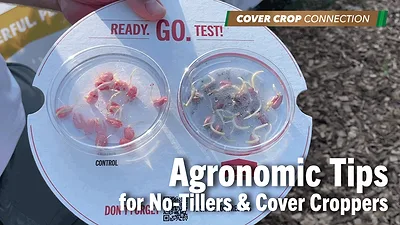
This week we are looking at a clip from Cody Hornaday, a technical agronomist with Koch Agronomic Services, as he explains a few tips that no-tillers and cover croppers should keep in mind for unlocking phosphorus in their soils.
Family Owned since 1964 – Remlinger Manufacturing was founded by Wilbur Remlinger in 1964 and the family tradition continues today with Wilbur’s grandson being the current CEO/President. Although the business has expanded and diversified, family remains a core value to the company and is evident in the company culture.
Made in USA – Remlinger Manufacturing is proudly located in Kalida, Ohio. We have dealers located across the US and Canada to conveniently serve our customers.
Quality Driven – With over 60 years of producing farm equipment, we continue our tradition of manufacturing high quality attachments and products to serve farmers around the globe.
Byron Seeds LLC is a team of individuals who have a passion for high energy forages, cover crops, and proper farming techniques. Byron personnel seek to understand our clients’ goals so that we may provide the best environment for our clients’ success through research, education, support, and...
Our years of experience and network of dealers make us the ideal choice for your mowing, no-till and horse drawn equipment needs. Use our Dealer Locator to contact your nearest I&J dealer today.