According to the latest USDA Crop Progress report, some 2% of corn has been planted in the week ended April 4, in line with the 2% planted in the same week last year.
The Haney soil health test, named for U.S. Department of Agriculture scientist Rick Haney, includes more than a dozen different soil-test values. Those include standard macro- and micro-nutrients for plant consumption, but what’s different about the Haney test is that it also estimates nutrients for microbial consumption, focusing on how much carbon and nitrogen is in the soil. Read more in this article from KMA.
The grants are designed to help partners implement and evaluate innovative approaches that have demonstrated conservation benefits on farmland. These conservation practices are sorely needed on Alabama farms for several reasons, said Rishi Prasad, assistant professor and Alabama Extension specialist in the Department of Crop, Soil and Environmental Sciences and leader of the research project. Read more in this article from Southeast AgNet.
USDA’s Farm Service Agency (FSA) announced that organic producers and handlers can apply for federal funds to assist with the cost of receiving and maintaining organic certification through the Organic Certification Cost Share Program (OCCSP). Applications for eligible certification expenses paid between Oct. 1, 2019, and Sept. 30, 2020, are due Oct. 31, 2020.
For the first time ever, the Ed and Andrew Askegaard families are using their prevented-planting insurance. “Here we are,” Ed said, “after Memorial Day, harvesting our COVID-19 corn." Read more in this article from the Capital Journal (Pierre, SD).
The USDA is providing additional flexibilities for producers to file on acres with failed crops or crops that were prevented from planting because of extreme weather events. USDA’s Farm Service Agency (FSA) is adding these flexibilities for Notice of Loss on both insured and uninsured crops to enable Service Centers to best assist producers.
More and more growers are becoming interested in cover crops and no-till and the soil health benefits they can provide. A 4-year study conducted by South Dakota State University (SDSU) and USDA-Agricultural Research Service reiterates just that fact.
The Haney soil health test, named for USDA scientist Rick Haney, includes more than a dozen different soil test values. These include standard macro- and micro-nutrients for plant consumption, but what’s different about the Haney test is that it also estimates nutrients for microbial consumption, focusing on how much carbon (C ) and nitrogen (N) is in the soil. Read more in this article from University of Minnesota Extension.
Wayne Fredericks walks out into a cornfield on his northern Iowa farm and points out the first bits of spring growth of a cover crop shooting through the cornstalks. “We didn’t use cover crops years ago,” he says. “In fact, when I first started farming in 1973 … we didn’t treat the land very well.” Read more in this article from the Rock Island Dispatch Argus (Davenport, Iowa).
Results of a three-year soil health study focusing on arbuscular mycorrhizal (AM) fungi proves there is still much to learn about soil microbes. “This is the purpose of research,” explains Mike Lehman, soil microbiologist for the U.S. Department of Agriculture - Agriculture Research Station (USDA-ARS) in Brookings, S.D. Read more in this article from Aberdeen News.
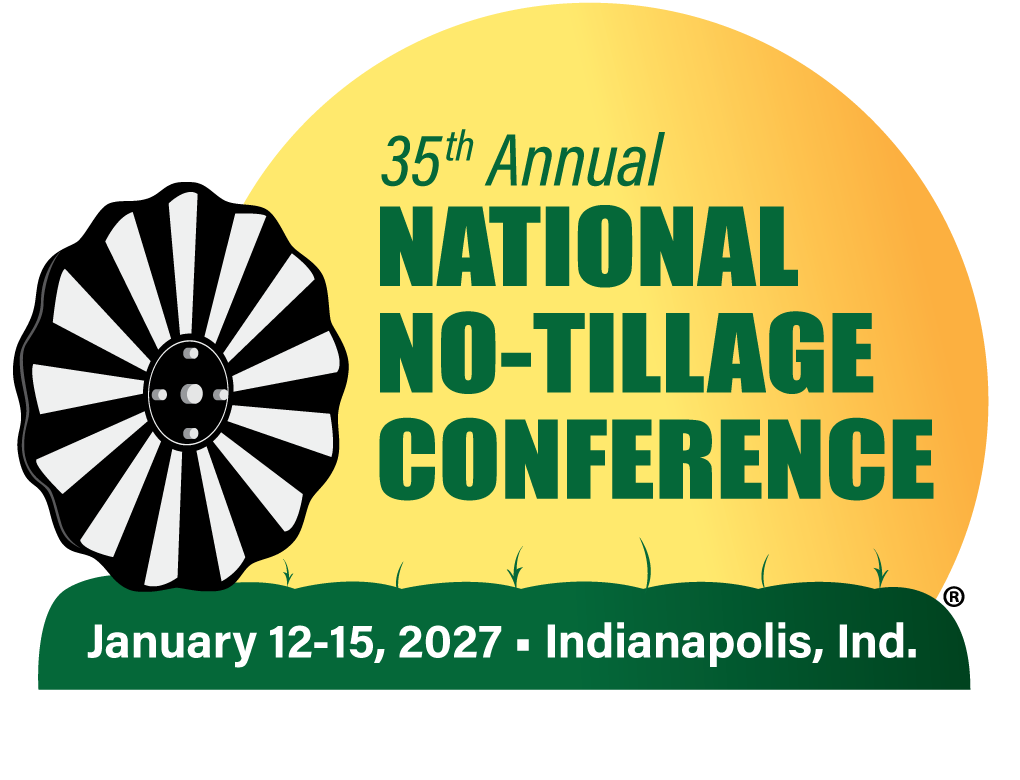
The National No-Tillage Conference returns January 12-15, 2027!Build and refine your no-till system with dozens of new ideas and connections at the 35th Annual National No-Tillage Conference in Indianapolis, Jan. 12-15, 2027. Experience an energizing 4-day agenda featuring inspiring general session speakers, expert-led No-Till Classrooms and collaborative No-Till Roundtables. Plus, Certified Crop Adviser credits will be offered.
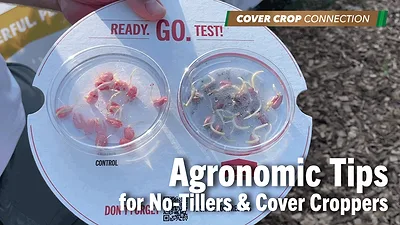
This week we are looking at a clip from Cody Hornaday, a technical agronomist with Koch Agronomic Services, as he explains a few tips that no-tillers and cover croppers should keep in mind for unlocking phosphorus in their soils.
Family Owned since 1964 – Remlinger Manufacturing was founded by Wilbur Remlinger in 1964 and the family tradition continues today with Wilbur’s grandson being the current CEO/President. Although the business has expanded and diversified, family remains a core value to the company and is evident in the company culture.
Made in USA – Remlinger Manufacturing is proudly located in Kalida, Ohio. We have dealers located across the US and Canada to conveniently serve our customers.
Quality Driven – With over 60 years of producing farm equipment, we continue our tradition of manufacturing high quality attachments and products to serve farmers around the globe.
Byron Seeds LLC is a team of individuals who have a passion for high energy forages, cover crops, and proper farming techniques. Byron personnel seek to understand our clients’ goals so that we may provide the best environment for our clients’ success through research, education, support, and...
Our years of experience and network of dealers make us the ideal choice for your mowing, no-till and horse drawn equipment needs. Use our Dealer Locator to contact your nearest I&J dealer today.