There are many cover crop seed choices when planting after small grain harvest or on prevent plant fields. You can get complex with various mixtures or keep it simple. Read more in this article from the Sentinel-Tribune.
As harvest quickly approaches, farmers are looking to get cover crops applied. Aerial applications of cover crop seed began in late August and early September, but for any other methods of application, things might be pushed back. Iowa State Extension Cropping Systems Specialist Mark Licht said the volatile 2019 growing season made things more complicated. Find out more in this article from the Kenosha News.
Timing, cover crop seeding rates and application methods are the keys to maximizing manure management for cover crops, according to Pennsylvania cover crop expert Steve Groff. Groff recommends that growers plant covers before applying manure and try to do both as early in the season as possible to get the most days with warm enough weather to help the cover crop stand get established. Applying manure to covers can be an efficient way to restore nitrogen in the soil.
Corn is one of the most common agricultural crops around the world. The crop got its start from the humble teosinte, a Mexican grass that was selectively bred and domesticated over 10,000 years to increase ear size and number of kernels to become the corn crop we know today.
Brassicas feature in most polycrop seed mixes on the market, but feeding cattle on those mixes may require some extra consideration. Learn more in this article from Manitoba Cooperator.
Farmers looking to incorporate cover crops into rotation are often left with the issue of terminating the crop. Is spraying enough? If you need to work the ground, what’s the best option? Find out in this article from Real Agriculture.
Fallow syndrome received its name from the dry plains states where fields routinely benefited from the additional moisture available after a year where the ground was fallowed. Corn sometimes had symptoms of phosphorus deficiency when corn was grown on this previously fallowed ground, thus it received its current name, “fallow syndrome”. Learn more in this article from South Dakota State University Extension.
After small grains, we typically try to get our cover crop mixes seeded by August 15. That date has blown by us and it is now mid-September with some wheat still being harvested. Find out more in this article by Abbey Wick, North Dakota State University Extension soil health specialist.
The National No-Tillage Conference returns January 12-15, 2027!Build and refine your no-till system with dozens of new ideas and connections at the 35th Annual National No-Tillage Conference in Indianapolis, Jan. 12-15, 2027. Experience an energizing 4-day agenda featuring inspiring general session speakers, expert-led No-Till Classrooms and collaborative No-Till Roundtables. Plus, Certified Crop Adviser credits will be offered.
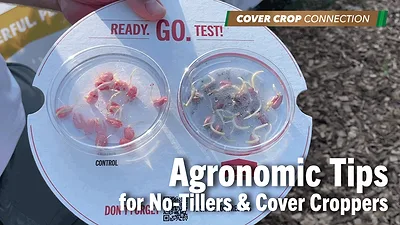
This week we are looking at a clip from Cody Hornaday, a technical agronomist with Koch Agronomic Services, as he explains a few tips that no-tillers and cover croppers should keep in mind for unlocking phosphorus in their soils.
Family Owned since 1964 – Remlinger Manufacturing was founded by Wilbur Remlinger in 1964 and the family tradition continues today with Wilbur’s grandson being the current CEO/President. Although the business has expanded and diversified, family remains a core value to the company and is evident in the company culture.
Made in USA – Remlinger Manufacturing is proudly located in Kalida, Ohio. We have dealers located across the US and Canada to conveniently serve our customers.
Quality Driven – With over 60 years of producing farm equipment, we continue our tradition of manufacturing high quality attachments and products to serve farmers around the globe.
Byron Seeds LLC is a team of individuals who have a passion for high energy forages, cover crops, and proper farming techniques. Byron personnel seek to understand our clients’ goals so that we may provide the best environment for our clients’ success through research, education, support, and...
Our years of experience and network of dealers make us the ideal choice for your mowing, no-till and horse drawn equipment needs. Use our Dealer Locator to contact your nearest I&J dealer today.