2019 has been a tough year for growers. Heavy rains and flooding throughout the Central Plains and Midwest have made planting extremely difficult, resulting in a significant increase in the number of prevented planting acres above the average. Many growers are looking to alternatives to protect their soil and possibly provide additional income, such as planting cover crops or planting for sileage. Read more in this article from Seed World.
The announcement by the USDA’s Risk Management Agency (RMA), enables farmers who plant cover crops on prevented plant acres to hay, graze, ensile, or chop those fields earlier than November 1. For 2019, RMA will allow farmers to make forage on prevent plant acres after Sept. 1. Find out more in this article from the News Gazette (Winchester, Indiana).
There are other options for growers besides letting your best soil blow away in the wind, says Pennsylvania cover crop expert Steve Groff. Planting into a standing cover crop can be handled in a variety of ways. Groff explains why your planter should be equipped with a roller crimper, how to evaluate your comfort or experience level with planting green, using the proper seeding rate and more.
Looking to learn more about building the soil? This podcast from the Northeast Sustainable Agriculture & Research Education program (SARE) breaks down the basics of soil.
Sweet potatoes are a common vegetable crop but aren’t typically thought of in the cover crop lineup. But this low-lying, drought-resistant crop is recommended by the Food & Agriculture Organization of the United Nations (FAO) as a cover crop.
David Brown experimented with many cover crops before settling on annual ryegrass for his 80-acre organic farm, Mustard Seed Farms. He found it to be the easiest cover crop to manage, especially when terminating it and incorporating it into the soil in the spring, which is typically cool and wet in his region.
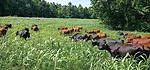
Cover crops are seen as a saving grace for soil health, and livestock is a big key to adding diversity and working cover crops into an operation. To help producers understand how cover crops play into cattle diets, South Dakota State University Extension hosted a talk on managing different forages at the Dakotafest farm show in Mitchell this summer. Find out more in this article from the Courier (Waterloo, Iowa).
It has been a challenge for many producers to reduce weed production on prevent plant acres as rains continues to dampen fields this year. Kent Vlieger, Natural Resources Conservation Service (NRCS), Soil Health Specialist, Huron, urges growers to forgo tillage and plant cereal crops to aid in controlling weeds this fall. Read more in this press release from NRCS.
Cereals, soybeans, and silage corn are all being harvested, or will be soon! That bare ground provides an opportunity to boost forage inventories by double cropping with a winter cereal, while getting all the benefits of a cover crop in the rotation. Read more in this article from the Ontario Ministry of Agriculture, Food & Rural Affairs.
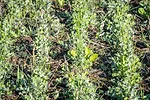
Cover crops have to produce a certain amount of growth, or biomass, in order to effectively reduce erosion and soil nutrient loss, suppress weeds, and supply forage. Several studies have indicated a threshold or minimum biomass (dry matter) of 1,000 lb/ac, which is similar to 6 to 8 inches of above-ground growth, although more biomass will likely lead to better outcomes. Read more in this article from University of Nebraska Extension.
The National No-Tillage Conference returns January 12-15, 2027!Build and refine your no-till system with dozens of new ideas and connections at the 35th Annual National No-Tillage Conference in Indianapolis, Jan. 12-15, 2027. Experience an energizing 4-day agenda featuring inspiring general session speakers, expert-led No-Till Classrooms and collaborative No-Till Roundtables. Plus, Certified Crop Adviser credits will be offered.
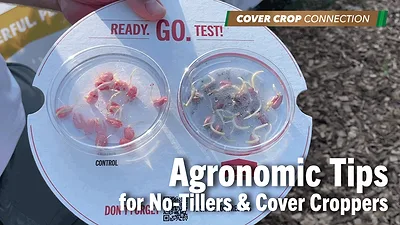
This week we are looking at a clip from Cody Hornaday, a technical agronomist with Koch Agronomic Services, as he explains a few tips that no-tillers and cover croppers should keep in mind for unlocking phosphorus in their soils.
Family Owned since 1964 – Remlinger Manufacturing was founded by Wilbur Remlinger in 1964 and the family tradition continues today with Wilbur’s grandson being the current CEO/President. Although the business has expanded and diversified, family remains a core value to the company and is evident in the company culture.
Made in USA – Remlinger Manufacturing is proudly located in Kalida, Ohio. We have dealers located across the US and Canada to conveniently serve our customers.
Quality Driven – With over 60 years of producing farm equipment, we continue our tradition of manufacturing high quality attachments and products to serve farmers around the globe.
Byron Seeds LLC is a team of individuals who have a passion for high energy forages, cover crops, and proper farming techniques. Byron personnel seek to understand our clients’ goals so that we may provide the best environment for our clients’ success through research, education, support, and...
Our years of experience and network of dealers make us the ideal choice for your mowing, no-till and horse drawn equipment needs. Use our Dealer Locator to contact your nearest I&J dealer today.