This agreement represents one of the largest soil-based carbon removals commitments to date, marking a significant milestone in the advancement of agriculture-driven climate solutions.
“Without knowing more about his operation and soils, it's hard to give specific advice, other than to keep the covers going. In our soils here, if I didn’t have cover crops, I wouldn’t have success with no-till.”
“When you approach the rootworm as just a problem that has to be solved, you’re not taking into account the animal’s biology,” Ann Marie Journey says. “You’re hitting it just at certain points or with certain methods or controls, and you’re not allowing yourself in effect to have a conversation to gain insight back from the rootworms about what it is that makes them successful in any given place."
Spring has arrived and there’s plenty to be excited about as always: Opening Day (go Guardians), March Madness (sadly, none of my teams made the tournament), planting season (I can’t wait to visit some of your farms this spring) and the release of the 12th annual National Strip-Tillage Conference program.
While a number of potential problems can occur with various forages, most can be managed. The most frequent problem is the accumulation of nitrates that is common with oats and brassicas but can occur in a variety of species under certain growing and management conditions.
Guidelines will facilitate the recognition of climate-smart agriculture within clean transportation fuel programs, creating new market opportunities for biofuel feedstock producers while enhancing climate benefits.
On Jan. 15, 2025, the U.S. Department of Agriculture (USDA) announced the publication of an interim rule on Technical Guidelines for Climate-Smart Agriculture Crops Used as Biofuel Feedstocks.
"I've been coming to this conference for over 10 years and this was definitely one of the best programs yet," an attendee told No-Till Farmer technology editor Noah Newman as the conference wrapped up.
Expect an energetic 4 days of non-stop learning in Louisville from leading no-tillers, agronomists, researchers & suppliers who will be sharing their most valuable ideas to help you get the most out of your 2025 no-till cropping program.
A longtime attendee at the National No-Tillage Conference (NNTC) recently told me our 2025 lineup of topics and speakers is among the very best in the entire 33-year history of this event.
Liz Haney. Russell Hedrick. Jerry Hatfield. Roy Pfaltzgraff. Lance Gunderson. David Kleinschmidt. Dan Luepkes. Sarah Martello. Talk about a cavalcade of All-Stars. With heavy hitters like those on the program, we knew this year’s Big Soil Health Event was once again going to be a can’t-miss event.
The U.S. leads the world in no-tilled acres, while two nations with the highest populations, India and China, don’t even make the Top 5 list. India has the second most arable land in the world and China comes in fifth.
The National No-Tillage Conference returns January 12-15, 2027!Build and refine your no-till system with dozens of new ideas and connections at the 35th Annual National No-Tillage Conference in Indianapolis, Jan. 12-15, 2027. Experience an energizing 4-day agenda featuring inspiring general session speakers, expert-led No-Till Classrooms and collaborative No-Till Roundtables. Plus, Certified Crop Adviser credits will be offered.
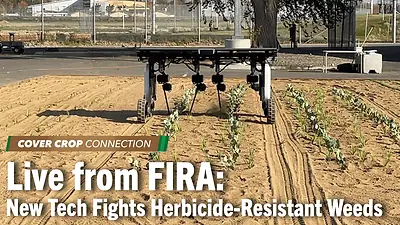
I'm in Yakima, Washington this week at FIRA USA where there's always lots of great ag technology on display. Why don't we go take a look at the newest edition of the Aigen robot. We'll hear from Kenny Lee, the CEO of Aigen.