Takeaways
- Tillage-based farming leads to bare soils and poor cropping diversity violates nature’s laws of productivity.
- Most reasons given for tilling the soil are primarily for the convenience of the farmer.
- Conservation agriculture was used on more than 451 million acres in more than 100 countries in the 20-18-2019 cropping year.
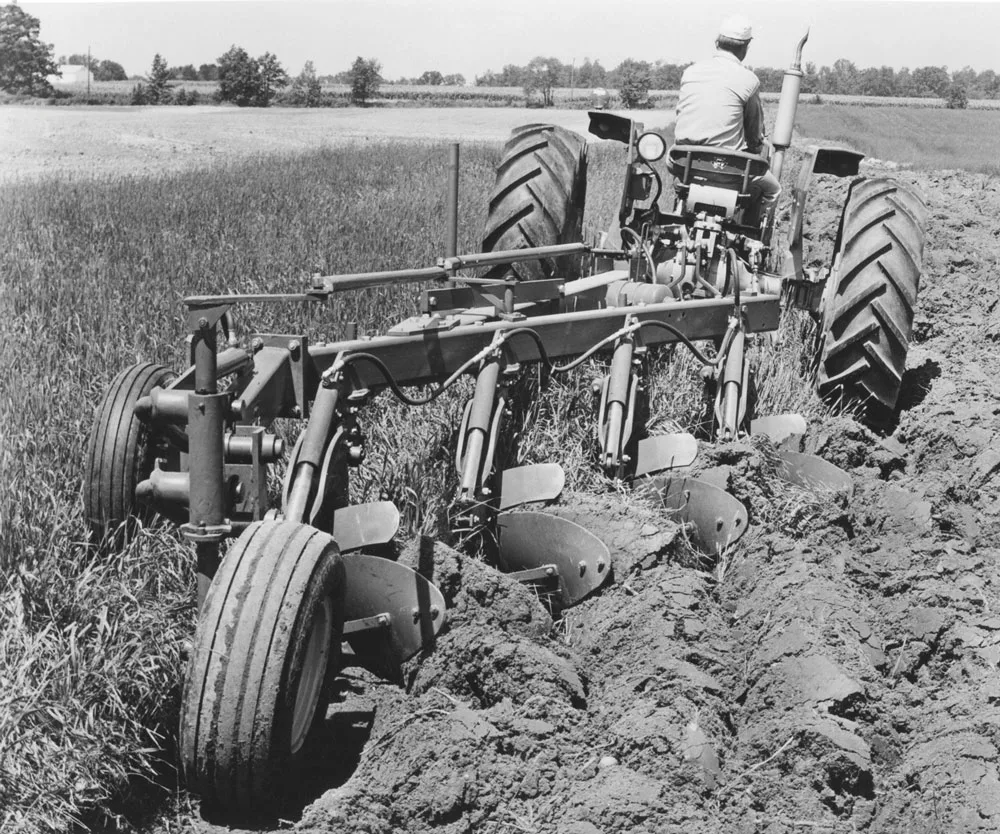
It’s seldom the negative side effects of moldboard plowing or extensively tilling the soil are discussed in soil research papers. But that’s not the case with a research paper that was written 2 years ago.
With the title of “Nature’s laws of defining soil productivity and conservation agriculture,” the paper was authored by German no-till consultant Rolf Derpsch, British researcher Amir Kassam, retired USDA soil scientist Don Reicosky, retired United Nations Food and Agriculture Organization researcher Theodor Friedrich and several other authors.
The paper highlighted the fact that degrading effects of tillage don’t receive the attention they deserve, keeping in mind that there are more living organisms in a handful of undisturbed soil than the entire world’s human population.
While many of the negative impacts of tillage may seem small and
inconsequential, the authors maintain the cumulative impact of small changes over time can lead to major soil degradation. Limiting productivity and production efficiency, this leads to spending more on inputs.
Derpsch and the other authors write that lost or degraded soil with any type of erosion is difficult to restore or regenerate. Ignoring the long-term negative environmental effects of tillage threaten future food production.
The main negative effects of moldboard plowing and extensive tillage are shown here in 6 essential cropping areas. For anyone who still believes strongly in conventional tillage. This list should be an eye-opener on why more growers need to be no-tilling or strip-tilling.
There are more living organisms in a handful of soil than there are people in the world…
3 Dozen Negative Consequences of Moldboard & Tillage in 6 Critical Areas
Carbon Capture and Storage
1. Leads to soil organic matter (C) losses
2. Soil C is oxidized to form CO2
3. Decreased C leads to biodiversity loss
4. Cuts and chops plant biomass for better incorporation maximizing biomass-soil contact and decomposition
5. Mixes soil and surface plant biomass to increase decomposition rate
6. Constant and continual soil disturbance decreases overall soil C content, fertility and quality
7. Depletes C required for microbial activity and soil structure formation
Hydrological
8. Destroys water-stable aggregates and soil structure
9. Rainfall leads to surface sealing and impedes infiltration, causing runoff and soil erosion
10. Water that does not infiltrate into the soil is not available to a growing crop
11. Bare soil leads to water, wind and tillage erosion
12. Each tillage operation reduces soil water equivalent, by up to 1-inch of rain
13. Bare soil water evaporation leads to high losses of plant-available water
Ecological
14. Creates unnatural and intrusive operation in the “living soil” with no parallel in nature
15. Disturbs all ecological functions
16. Negatively affects soil animals and insects living in and on the soil surface
17. Destroys soil insects, arthropods, bacteria and fungi
18. Alters the fungi-to-bacteria ratio
19. Destroys previous crop root and earthworm channels needed for deep water storage
20. Destroys the habitat of earthworms and other soil microfauna
21. Destroys habitats of ground-nesting birds
22. Some ecological impacts take over 100 years to recover from a single tillage pass
Physical
23. Causes soil compaction and creates tillage pans that require more tillage
24. Increased sediment in water due to soil erosion cause damages to water treatment plants
25. Erosion causes siltation of creeks, rivers, lakes, dams, asphalt roads, ditches and harbors
26. Most soil degradation is caused by physical and mechanical disturbance
Climate
27. Tillage-induced CO2 is a major GHG emission
28. Contributes to global warming and climate change
29. Leads to warmer soil temperatures and evaporation loss
30. High intensity rains lead to flooding and associated damage
Input Costs
31. Huge fossil fuel consumption
32. Most time-consuming farm operation
33. Highest horsepower demand among various tillage systems
34. Highest wear and tear requiring more equipment repair
35. Requires costly and degrading chemicals
36. Leads to negative economic and environmental consequences