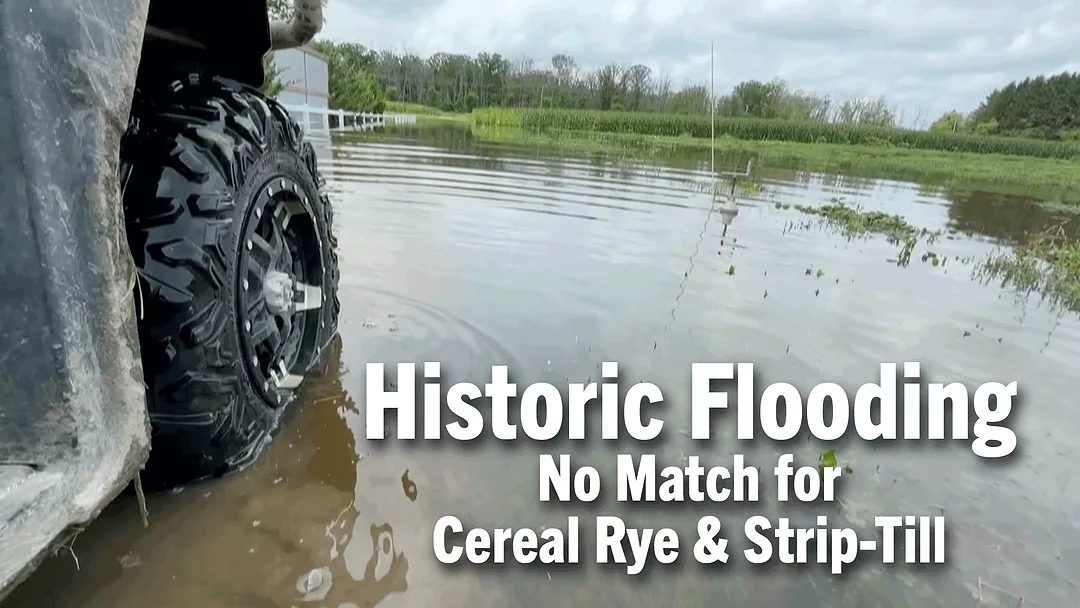
Back in August, we covered a historic storm that dumped a foot of rain on the Milwaukee area in less than a day. Basse’s Farms in Colgate, Wis., was right in the middle of it.
As we check out some footage showing the aftermath of all that rain. But fast forward to October, and their pumpkins turned out great. Blake Basse credits his switch to strip-till and cover crops for helping the pumpkins survive and thrive.
“A rain event of that magnitude in the past, we would’ve seen at least a 50-60, even 70% loss in our fields. We were shocked, and during the flooding event we were quite worried because we knew what happened in the past. We came out after that historic rain, we had a foot of rain in a 2-day window. If it wasn’t for all our pumpkins sitting on rye, and strip-tilling and getting them off to such a great start to sit on the rye and stay on the rye, and disease pressure is down, we would’ve had a much different outcome. That’s the only thing I can chalk it up to because these are the big differences we just made.”
They just switched to this system in 2024 after years of conventional tillage. Once soybean harvest wraps up, Blake will drill in a heavy rate of cereal rye. Then he’ll make strips through that rye in the spring before planting the pumpkins.
Watch the full version of this episode of Conservation Ag Update.