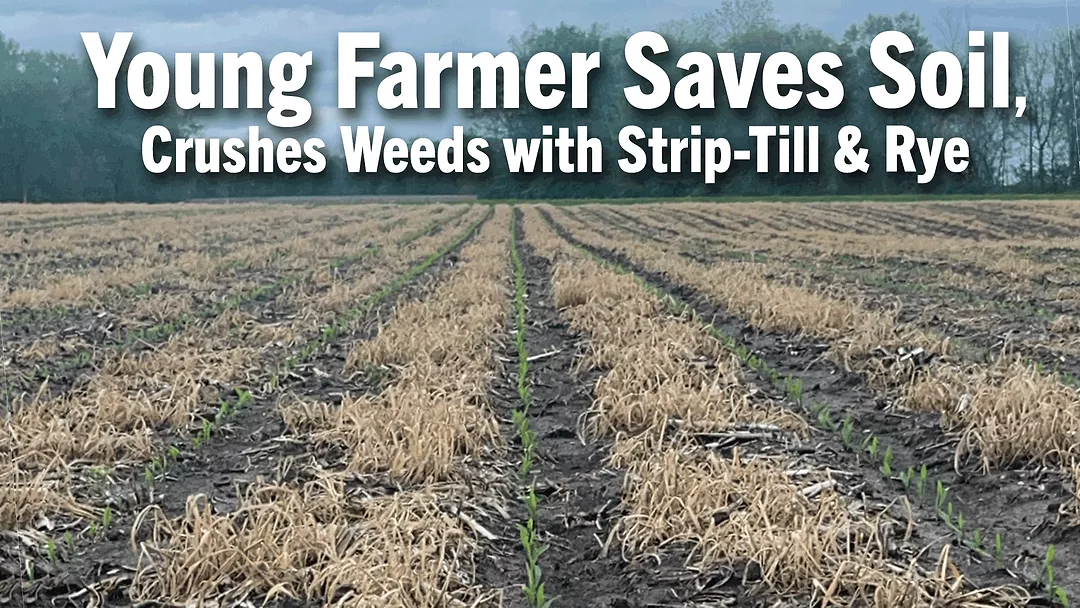
Meanwhile, over in Mt. Sterling, Illinois, young farmer Wade Yingling and his dad, Bruce, are capturing success with strip-till and cover crops, with a little vertical tillage mixed in as well.
They use a 16-row Case IH strip-till bar with a shank setup to make strips and apply anhydrous in the fall. Then in the spring, they come back with a Yetter Strip Freshener coulter unit that dribbles UAN, ATS, humics and micros 2-by-2 on each side of the strip.
And they plant cover crops on just about every single field that’s going from strip-tilled corn to no-tilled soybeans.
“We have a Valmar seeder on our Accelerator vertical tillage tool. We chop, size residue and then blow on cereal rye. We typically do about 35-40 pounds of cereal rye, it’s what we’ve been doing the last few years. We really like it. We’ve got a lot of highly erodible ground, a lot less erosion. Erosion is just a big deal for us. Weed control is another big one (benefit). It just works really well, and it seems like the ground…takes the hard beating rains better. The ground doesn’t get as hard as quick, it seems like. We plant beans into it green when it’s 4-6, all the way to a foot tall or more. Try to terminate it within a few days, or a week or two. Just depends. Sometimes we let the beans get up.”
Make sure you marry the planter to the strip-till rig, that’s Wade’s big piece of advice if you’re thinking about strip-tilling.
Watch the full Video of this episode of Conservation Ag Update.