Contributed by Aaron Becerra-Alvarez and Marcelo Moretti, Department of Horticulture, Oregon State University
In recent years, researchers at Oregon State University (OSU) have been exploring the potential of Electric Weed Control (EWC) in perennial organic systems like blueberry and hazelnut production. EWC has proven to be a non-selective, soil-friendly method of eliminating both broadleaf and grass weeds—without disturbing the soil surface, an important benefit for organic producers focused on long-term soil health.
Building on this success, our labs (Becerra-Alvarez Lab and Moretti Lab) are now investigating whether EWC could also be used to terminate cover crops—a vital component in organic vegetable farming. Traditionally, cover crops are managed through mowing and tillage, but these practices can negatively impact soil structure and microbial health. Organic growers recognize the value of reducing tillage but face limited alternatives for effective vegetation control.
If EWC proves effective for terminating cover crops, it could unlock new potential for no-till organic systems, offering a scalable solution for farmers who rotate between different crops. This would enhance the value of investing in EWC technology by making it useful across multiple cropping systems, ultimately helping organic growers manage weeds and cover crops more sustainably.
Cover crop termination trial
We conducted a trial at the Oregon State University Vegetable Research Farm in Corvallis, OR to explore EWC as a cover crop termination tool for organic no-till systems. The field was planted with a cover crop mixture of oats and red clover in the fall of 2024. The cover crop termination treatments, shown in Table 1, were implemented starting on May 6, 2025.
A tractor-driven, commercially available electric applicator unit (EH30 Thor, Zasso, Brazil) with a 4 ft wide applicator was used in this study to apply electricity on the cover crop (Figure 1). The mowing was performed with a Pak flail mower (IFA Flail, Rears Mfg. Co., Coburg, OR). Each plot area received five passes to treat the 25 ft by 300 ft treatment area. A 10 ft buffer was in between plots. The field was arranged as a split plot design where the main plots were the cover crop termination method, and the soil preparation was randomized within the main plot (Table 1). Each treatment was replicated three times. The soil tillage treatments were performed by doing three passes with a disc in each plot followed by a rototiller to level the upper soil surface. The no-till treatments were left untouched after terminating the cover crop. A few days after terminating the cover crop and preparing the soil, snap beans were planted with a John Deere 7000 conservation planter at 30 in row spacing and a plant population of 182,000 A-1.
Figure 1. Cover crop termination with electricity on a field planted with a mix of oats and red clover in western Oregon.
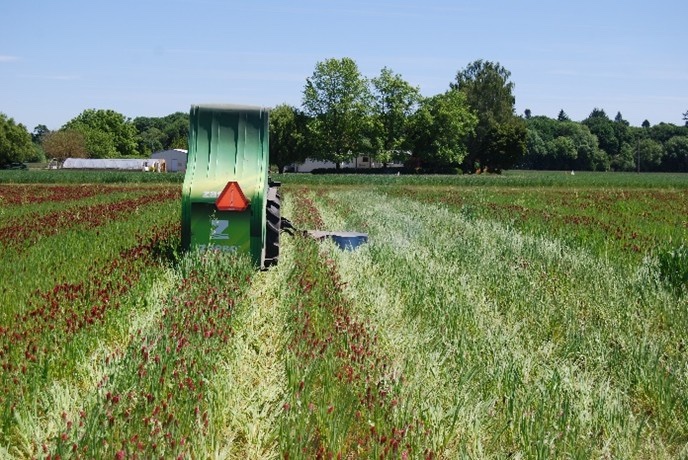
The EH30 Thor, Zasso, is applying electricity on a cover crop mixture of oats and red clover in western Oregon for termination before planting. Source: Oregon State University
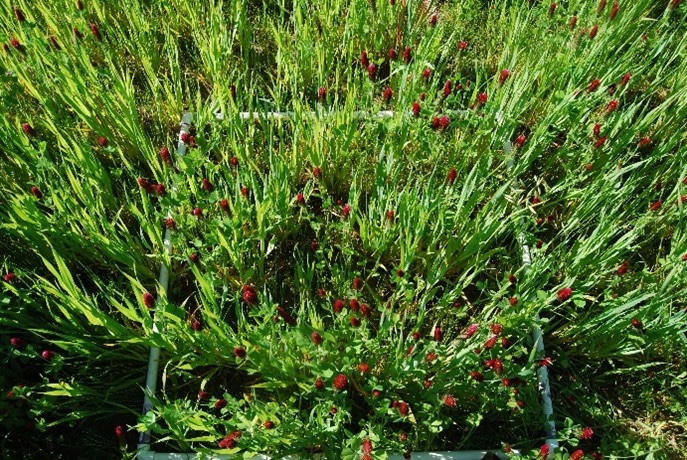
Cover crop biomass at the time of applications before treatments. The field was planted with a mix of oats and red clover. Dry biomass averaged 8.7 lbs ft2 on the day of the treatments. Source: Oregon State University
Results
The EWC demonstrated good control of the cover crop when applied at 15 MJ ha-1 or 0.6 mph. Both grass and clover control were improved with the EWC compared to mowing alone (Figure 2). The EWC had improved control of weeds in the understory of the canopy and killed most of the vegetation in the field (Figure 2 and 3). However, the electric applicator had to have good contact with all the plants to result in an effective kill. Some areas with dense weedy grasses in the canopy understory showed reduced control (Figure 3). This brings up the question, how well can EWC perform in dense cover crops where the plants are larger than our field or different plant species? This is still unclear.
Figure 2. Results of cover crop termination with mowing, EWC, and mowing + EWC before soil preparation at 21 days after initial treatment (DAIT). Standard error is presented on error bars and means were subjected to Tukey’s HSD α=0.05.
The count of live plants includes all cover crop species and weeds present in the field. Other weeds present at the time of collection included ryegrass and filaree. EWC at 15 MJ ha-1 translates to 0.6 mph of tractor speed.
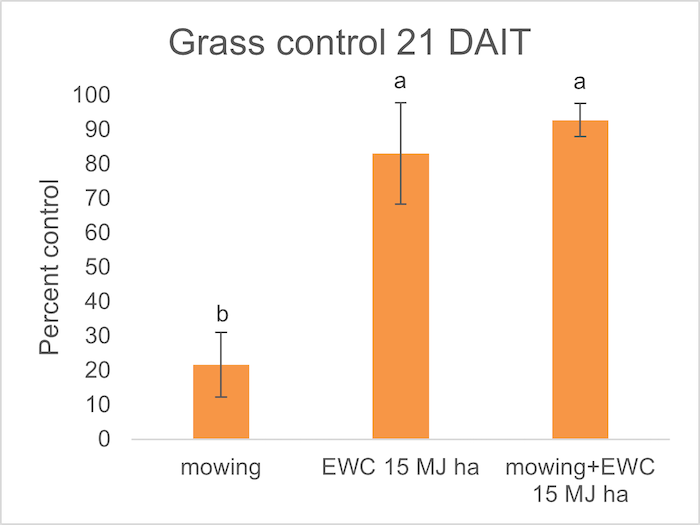
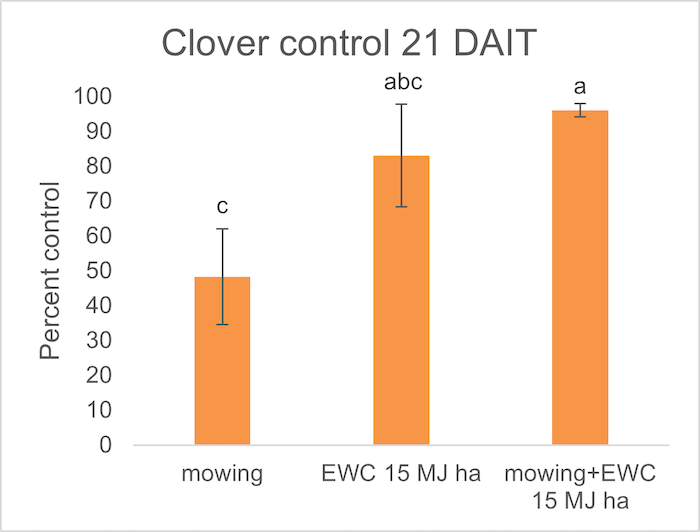
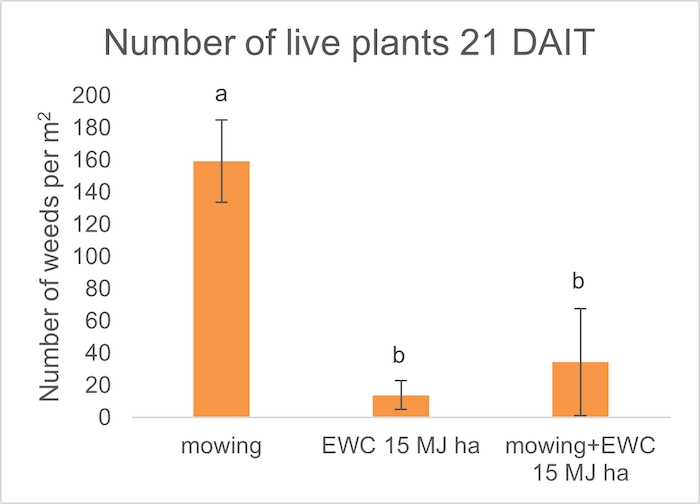
Figure 3. Close-up image of the cover crops one week after an EWC application (top) and mowing (bottom).
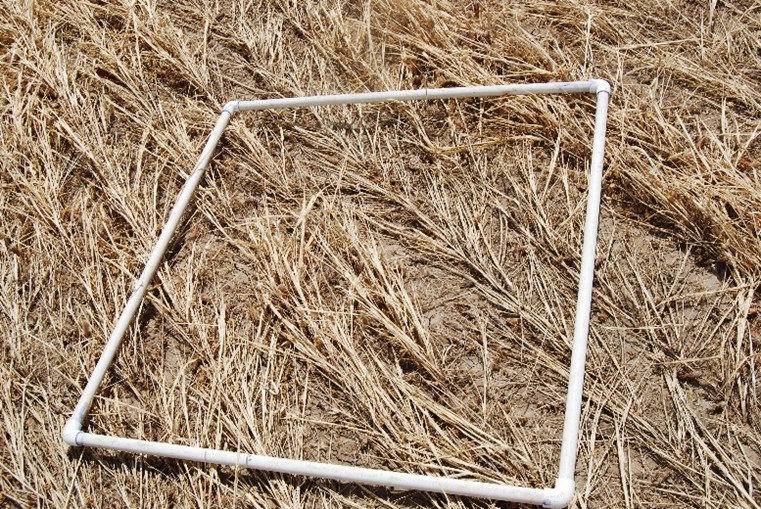
EWC controlled all cover species and weeds under the canopy. Source: Oregon State University
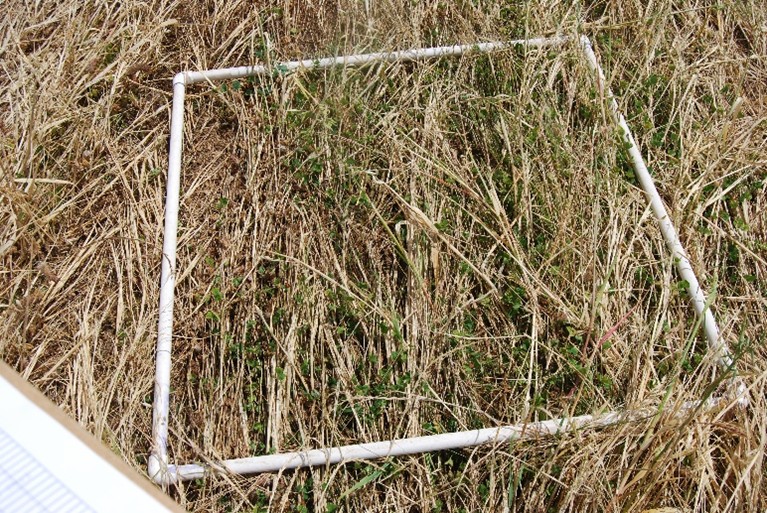
In dense biomass areas, EWC had reduced control of vegetation under the cover crop canopy. Source: Oregon State University
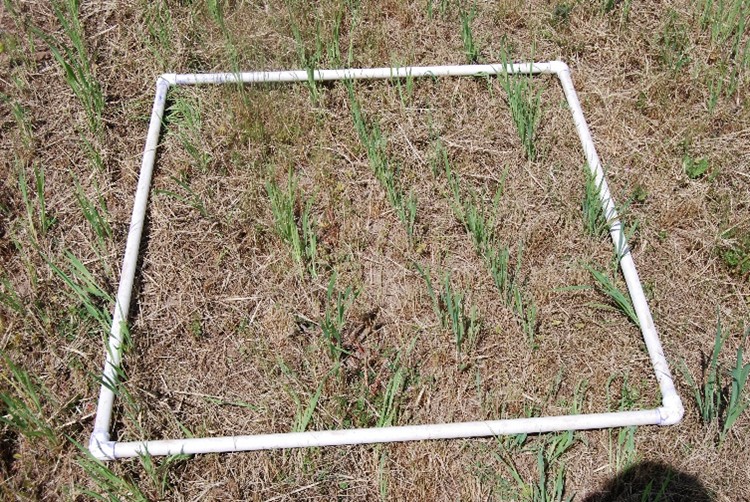
The treatment after mowing still left many oats to continue growing. In treatments where EWC followed, some of the dry biomass was prone to catch on fire. Source: WSU
The mowing + EWC also showed good control; however, when applying the EWC after mowing there is dry plant biomass on the soil surface and there is greater chance of the dry biomass catching fire, especially if it is a windy day (Figure 3).
After the soil preparation and planting of beans, the tillage treatments proved to significantly improve bean establishment and growth compared to the no-tillage treatments (Figure 4). The beans struggled to establish in all the no-till treatments; however, the termination with EWC had killed all cover crop plants leaving greater dry residue on the surface and giving some advantage to the beans for establishment early on. Unlike the mowing + EWC which left the plots more like bare ground, and the mowing only treatment still left living grasses to continue competing with the beans. Different crops may perform better in a no-till system than snap beans in our environment and worth exploring.
Figure 4. Plots after the soil preparation treatments and 2 weeks after planting (WAP) of beans.
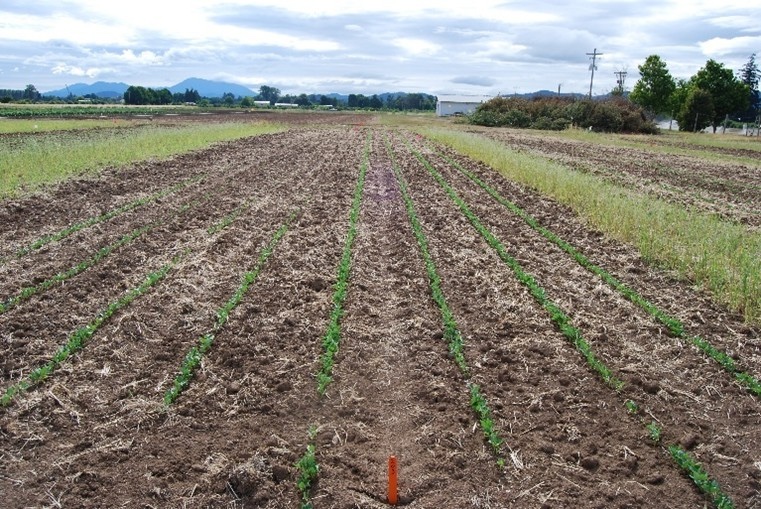
Tillage after cover crop termination with mowing. Source: Oregon State University
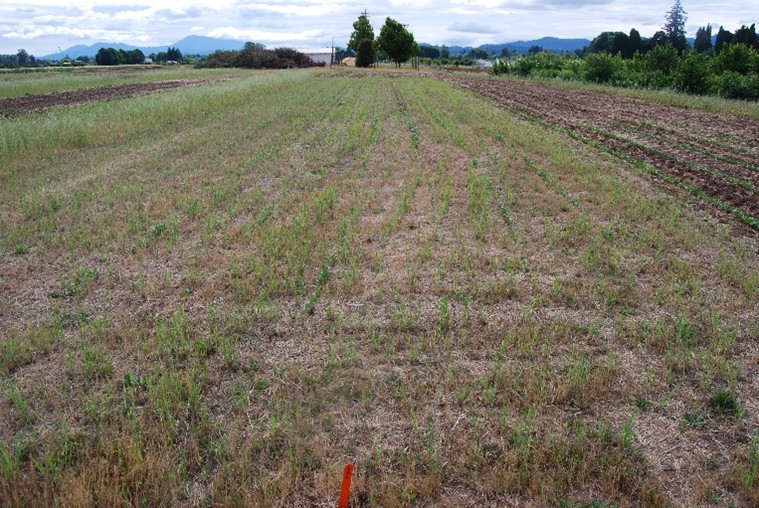
No-tillage after cover crop termination with mowing. Source: Oregon State University
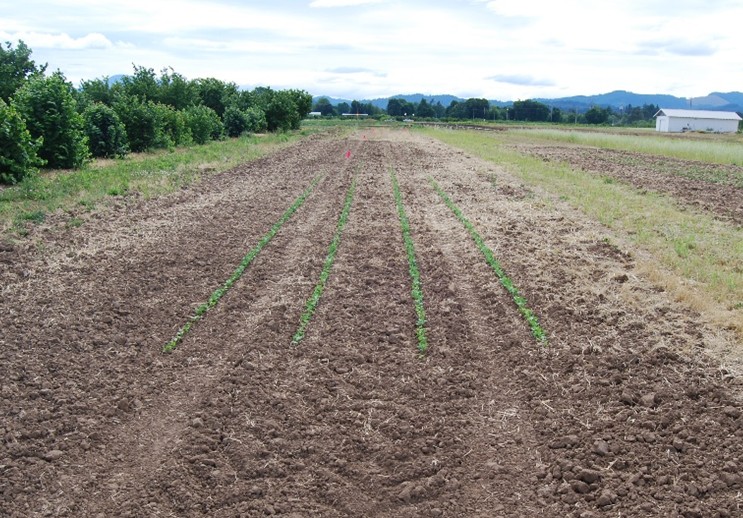
Tillage after cover crop termination with EWC only. Source: Oregon State University
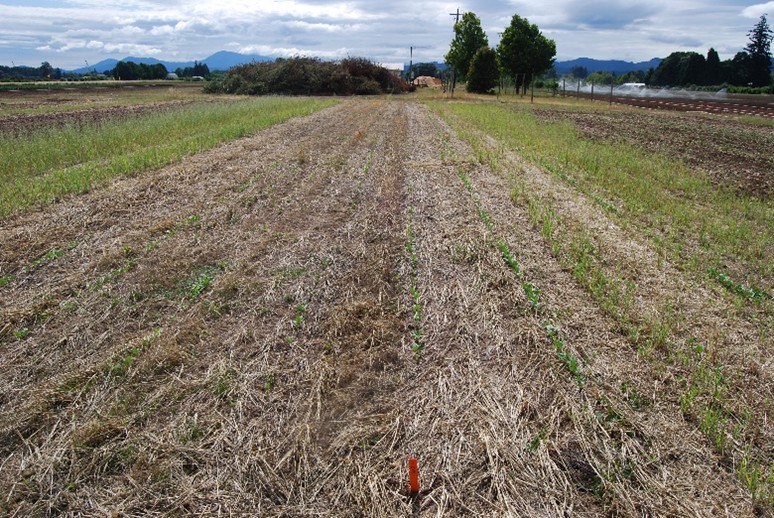
No-tillage after cover crop termination with EWC only. Source: Oregon State University
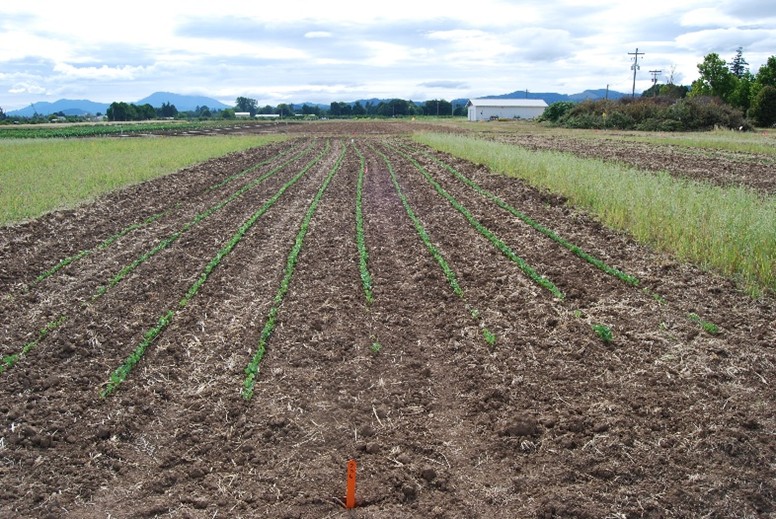
Tillage after cover crop termination with mowing + EWC. Source: Oregon State University
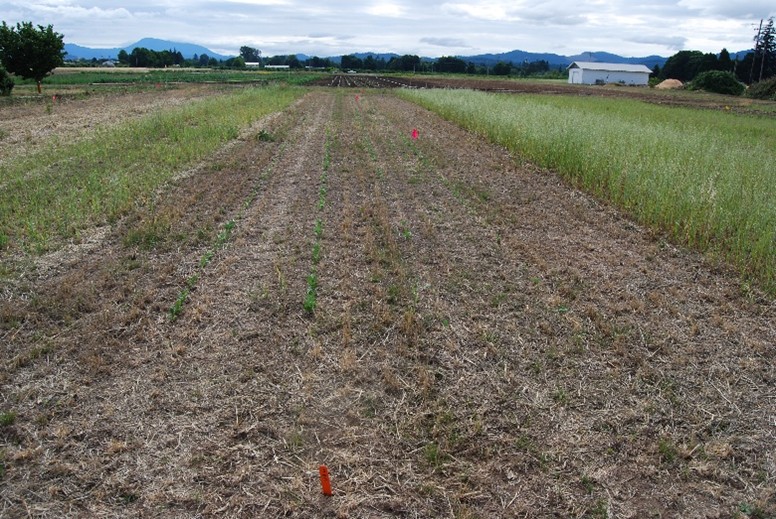
No-tillage after cover crop termination with mowing + EWC. Source: Oregon State University
Future research is needed to determine if EWC is capable of being a cover crop termination tool across different species, and energy levels (speeds), and its benefit for no-till farming practices. The timing of planting after the termination treatments may also be a critical aspect to improve the crop establishment and growth in no-till. However, our preliminary results are promising.
If you are interested in the full results of this trial, feel free to reach out to me Aaron Becerra-Alvarez, or visit our lab website for a full report by fall of this year.