Articles by Laura Barrera

Grazing

Covering the Soil, Feeding the Livestock

While a minority of livestock owners feed their animals their cover crops, those that do see no ill effects & most see a financial value in grazing them
Roughly 34% of livestock owners grazed their cover crops, 30.6% harvested covers for livestock and 16.2% used covers for silage.
Read More
Seeding & Termination

Cover Crop Seeding & Termination Trends

More growers waited to seed cover crops after harvest, those seeding with a drone doubled, & a record number planted green
In studying the seeding and termination trends of the sixth annual Cover Crops Operational Benchmark Study, it appears that practices remained consistent, and largely, continued to grow in numbers.
Read More
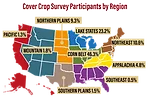
Participants-by-Region-700.png
Planting Green

Cover Cropped Acres Grew, Record Percentage of Growers Planted Green

Other key findings from the annual Cover Crops Operational Benchmark Study include more drone seeding, reduced spending on seed & glyphosate remaining the No. 1 termination choice
Based on those who shared the number of acres they seeded to cover crops, the total across all survey participants was 267,003 acres, making the average number seeded per farm 694 — a new record from the 504 average we saw in 2023.
Read More
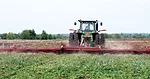
rolling-hairy-vetch-and-peas.jpg

Killer Tips for Rolling Your Covers

Thorough cover crop termination with this equipment requires using the right plant varieties and carrying out operations at the right time.
“When conditions are right, rolling cover crops and not using herbicides can work about one out of five times,” says Holtwood, Pa., no-tiller Steve Groff, who’s been rolling and crimping covers since 1995. “One out of five times it’ll be a disaster, and three out of five it’ll be in the middle. That’s the realistic expectation.”
Read More
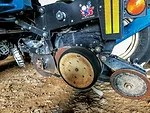
No-Till Drills

Fine-Tune No-Till Drills for Better Cover Crop Seeding

Whether it’s getting cover-crop mixes seeded properly, or determining the right planting depth, equipment experts and no-tillers themselves offer tips on improving cover-crop seeding with no-till drills.
From airplanes and helicopters to highboy seeders, spreaders and planters, there are plenty of options for seeding cover crops. But many no-tillers prefer to use the tried-and-true no-till drills to seed covers.
Read More
Image16-1

Rolling Covers, Planting Non-GMOs ‘Green’ Leads to Efficient, Thriving No-Till System

By relying on good farm data to improve their operation, Rick Clark and family are capitalizing on the non-GMO crop market while cutting costs, building soil health and stabilizing yields.
Yield doesn’t drive Rick Clark’s no-till system. Instead, the fifth generation no-tiller intensely focuses on building soil health as the driver of his family’s 7,000-acre operation near Williamsport, Ind.
Read More
Kinze

Curbing Nitrogen Runoff in the Chesapeake Bay with Data, Precise Placement

With over 10,000 acres of cover crops, Trey Hill explains how he’s updated his equipment for better fertilizer placement, while data from Encirca helps him decide on nitrogen amounts.
In an effort to curb nutrient pollution in the Chesapeake Bay, Maryland farmers have been met with strict regulations on when, how and how much fertilizer they can apply to their fields.
Read More
NNTC_Logo_2026_4c_Outlined.png

The National No-Tillage Conference returns January 12-15, 2027! Build and refine your no-till system with dozens of new ideas and connections at the 35th Annual National No-Tillage Conference in Indianapolis, Jan. 12-15, 2027. Experience an energizing 4-day agenda featuring inspiring general session speakers, expert-led No-Till Classrooms and collaborative No-Till Roundtables. Plus, Certified Crop Adviser credits will be offered.

Learn More

Top Articles

Must Read Free Eguides

Download these helpful knowledge building tools

View More
Get all things Cover Crop all the time!

Start Your Membership
Top Directory Listings