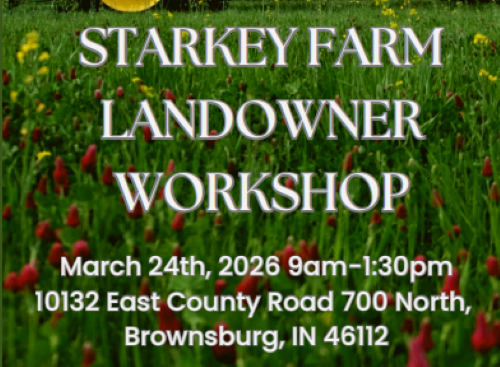
Editor’s Note: In the March 2026 quarterly directors meeting of the Conservation Ag Foundation (a nonprofit group devoted to practical education of conservation ag practices), Indiana no-tiller Mike Starkey explained to his fellow board members what he’s doing with a second-annual event for landowners held in his farm shop. The attending landowners jumped in support of his conservation practices – and with rent reductions, no-less. I attended the inaugural event in 2025, which is seeing an encore performance this week in Brownburg, Ind.
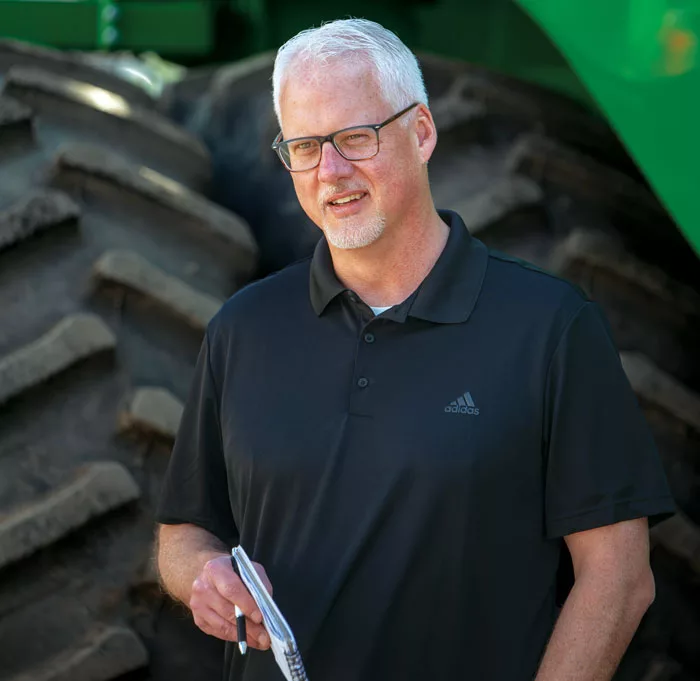
At this point in his long farming career, Mike Starkey of Brownsburg, Ind., (20 miles west of Indianapolis) doesn’t need to acquire more acres to rent. But with just one-third of his total farmed acres under his own ownership, he does need to maintain them. And he also believes that a well-informed landowner is good for all farmers who want to protect soils for generations to come.
A lot of landowners are unaware of what is happening on the ground they rent out, he says. “They can get excited about hearing these things and therefore they encourage their tenant farmers to change their practices.”
“Six months after putting together his first-ever day-long educational workshop for Indianapolis landowners on practices to enhance soil and water quality, 100% of Mike Starkey’s landlords reduced his cash rents for 2026.…”
Showing conservation practices can bring the general public into awareness as well as our politicians. “If we let our politicians know, our representatives know, we could find greater support from them.”
Real-World Incentives via Reduced Rent
“I'm not saying landlords should force their tenant farmers to do it a certain way, but we can encourage them to give some incentives for the outcomes they want. With the farm economy in a mess, I sent a letter to all my landlords last fall that my cash rent HAD to go down and why. It helps when my landlord knows the type of farming that I'm doing on their land. None had a problem reducing my cash rent.”
““I'm not saying landlords should force their tenant farmers to do it a certain way, but we can encourage them to give some incentives for the outcomes they want.”
In fact, Starkey got a cash rent reduction of at least $50 per acre from every landlord he sent his letter to. “Every one of my landlords agreed because they saw how I was taking care of their land. We’ve shown them how no-till and cover crops are improving their soils for the future generations.”
Not only are incentives possible through rent reductions but there are other ways landowners are willing to give back to their farm tenants. Starkey noted that landlords who better understand things will come forward to invest in tiling, cover crop seed and its application.
During the Q&A at last year’s event, one landlord shared that she’d paid for the cover crop seed for another farmer who lacked confidence in taking on the extra cost. She wanted that cover crop on her soil and picked up the entire expense.
Starkey was happy to see the farmer receive her support and gain experience with a new practice that’ll be good for all. Regardless of where the education comes, it raises the tide for all farmers, he notes.
A Simple, Low-Cost Event
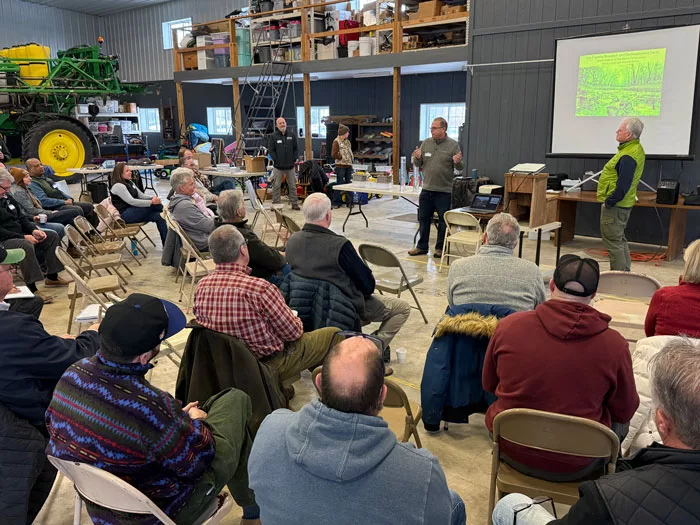
Starkey’s first landowner event – held in his farm shop in the Winter of 2025 – was considered a big success, and he was asked to do it again this year. No-Till Farmer staff attended along with several other groups, and Starkey distributed No-Till Farmer and Cover Crop Strategies editions as well as the special “landowner report” (How No-Till Improves Your Land Value) to attendees during a day that included presentations, demonstrations, questions and answers and a catered lunch buffet.

Farmers are encouraged to download this special report and distribute IT to their landowners on ways progressive farmers are taking care of their soils, streams and wildlife.
There isn’t much expense to running such an event, other than cleaning the shop and setting out tables and chairs, lining up the presenters and getting the word out.
“An event like this is great for feedback and strengthening that relationship with your landlord. It's good for establishing that valuable one-on-one relationship where they WANT to continue to work with me.”
“One landlord shared that she’d paid for the cover crop seed for another farmer who lacked the confidence in taking on the extra cost. She wanted that cover crop on her soil and picked up the entire expense.”
As for getting the word out, some have suggested that the Farm Service Agency (FSA) offices can help communicate such events from rental contract addresses. Starkey noted that his local Soil and Water Conservation District (SWCD) included the description from his flier to the subscribers of the SWCD quarterly newsletter.
“That's how I started and then personally contacted my own landlords,” he says.
Agenda for the March 2026 Landowner Event at Starkey Farms Partnership. As seen in his own event, Starkey suggests a slate test demonstration, primary data on water monitoring projects and presentations from other farmers practicing cover crops and conservation tillage.
UPDATE: Mike Starkey will be speaking at the 2027 National No-Tillage Conference (35th Annual) in Indianapolis to assist other farmers in running their own local-level workshops for landowners.