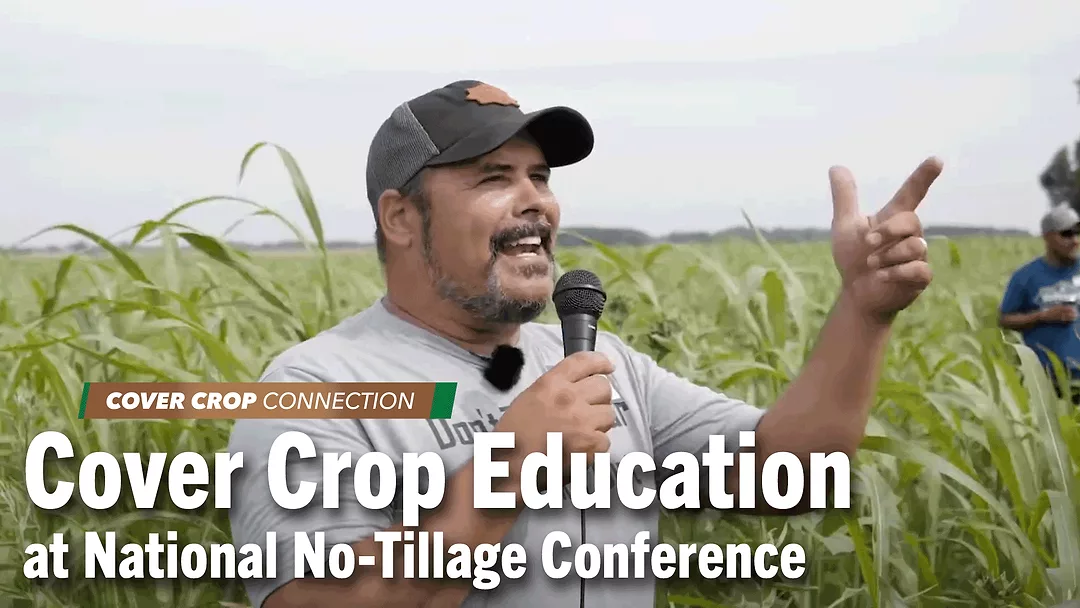
Cover crops are sure to be a hot topic at this year’s National No-Tillage Conference. So here’s Minnesota no-tiller and cover cropper Tom Cotter to give a brief preview about his presentation at the conference, plus why he finds the event so valuable as an attendee.
Tom Cotter: “I'm going to talk about using your senses. We always look at soil health and think that we have to measure it and we got to have the soil test, and I like soil testing, but I also like being accountable for myself so I talk a little bit about senses and how we as farmers, caretakers can see what's going on. And then also I think my plus negatives, people really like that because like I said, it's a common sense approach. We're not getting fancy, nature is, yes, it's crazy and intricate, but it's also very simple and easy to go with if you let yourself. And sometimes that's hard. The name of the true potential, that's hard on people because a lot of people, I don't know if they're truthfully giving it all to their best, and this is just kind of my way of giving it my best.”
Mackane Vogel: “Yeah. Well said. You've been at this a long time, the no-till, the cover crops, and it's especially interesting. You're in Minnesota, there's tons of people, tons of farmers you say, the farther north you go, the colder it gets, can't be done, it's too hard. What do you say to those people?”
Tom Cotter: “Well, right behind me, you can see the snow, and that snow is protecting my cover crop. I can overwinter cover crops with good snow protection and good structure and your plants out there, I can overwinter really good. I've been pleasantly surprised over the years that if you build it, it'll stay healthy and be there in the spring for you.”
Mackane Vogel:“For the farmer who's out there and maybe hasn't tried cover crops yet, but is in that northern part of the states and it's cold and they're just maybe a little hesitant to do it because of the climate, because of the things that people say about that. What's your word of advice for that farmer who's not tried it yet, but is thinking about it and is maybe in a similar climate to the one you're standing in right now?”
Tom Cotter: “I always tell people, when in doubt, plant something, but that, but also patience. So up here, everywhere actually, we're so used to a corn soybean rotation, we don't even know what another plant looks like without calling it a weed. So up here, network with people, there's so many opportunities to get something planted. I often tell people, Johnny Appleseed, go throw some seed out there in the corner of the field and just see what happens, and people will be surprised if they're truthfully honest with themselves with what's going on.”
Mackane Vogel: “Separate from your presentation, what's kind of your favorite thing about the No-Till Conference? What do you get out of it as a farmer? And maybe it's the sessions, maybe it's the network in the hallways, what do you like best about it?”
Tom Cotter: “It's absolutely the networking. Well, I do like that I have tons of different options to hit specific areas that I might have to improve on because no one's an expert at this, we're all just trying our best and so I find my weak points at home and when I go there I can mark off the classrooms I want to hit. But tell you what, farmer to farmer, you can't beat farmer to farmer.”
Well we hope to see you all in St. Louis to learn lots more about no-till, cover crops and all things conservation ag.