This article originally appeared in the November 2025 No-Till Farmer issue as part of the Getting Started with No-Till Farming series.
Plant Earlier When Cover Crops Can't Be Terminated Until Later
A wet spring may prevent farmers from entering fields to terminate cover crops until later in the growing season. Having to wait an additional 2-3 weeks for the cover crops to die and dry out will push back cash crop planting late into the year.
By planting green, farmers don’t have to wait for cover crops to dry down and can plant weeks earlier. Well-maintained planting equipment will slice through a living cover crop.
Add More Atmospheric Nitrogen Into the Soil
Cover crops selected for their ability to fix atmospheric nitrogen will fix substantially more when allowed to grow longer. Peak legume nitrogen fixation occurs after flowering, so delaying termination a few weeks can drastically increase nitrogen additions to the soil.
Build Up Soil Organic Matter Faster
Cover crop residues within a more mature vegetation have higher carbon to nitrogen (C:N) ratios and are more resistant to decomposition. As these residues are incorporated into the soil and decompose, significant enhancements are seen to soil biological activity, biological diversity, potential soil carbon sequestration and soil organic matter gains.
Less Deer & Slug Damage
When planting green, the green cover crop residue may serve as a food source for pests like deer and slugs, reducing potential damage to cash crops.
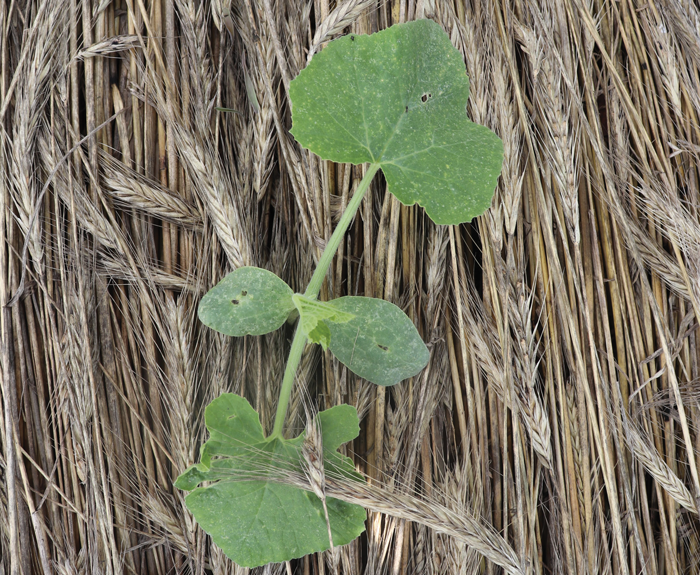
Cover crops can accumulate large amounts of carbon-rich organic matter Source: Bridgett Hilshey
Reduce Compaction When Planting
Actively growing cover crops can dry the soil faster during wet growing seasons. This allows farmers to enter fields earlier for planting and reduces the potential for compaction. Cover crop roots will grow deeper, increasing water infiltration and reducing soil compaction.
Create a Thick Soil Mulch
Large mats of cover crop biomass on the soil surface keep the sun and wind off the soil surface; this results in reduced heating of the soil, improved soil moisture conservation and reduced plant transpiration during the growing season. The mulch can also reduce (or eliminate) the need for post-emergence herbicides.
Expert Tip — Cleaner & Healthier Product for Specialty Vegetable Operations
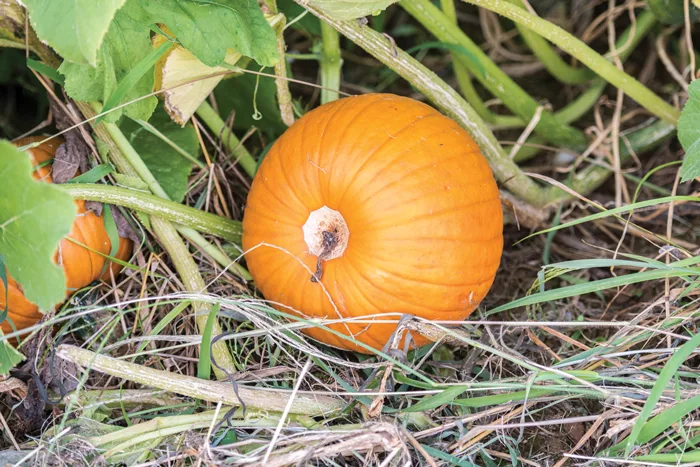
A dense residue mat will reduce ground contact for crops like pumpkins, winter squash, processing tomatoes, and u-pick operations. The physical barrier can result in cleaner, more attractive, marketable crops that are more likely to be free from ground contact defects.
Risks & Warnings for Planting Green
Planting green opens farmers up to the potential of significant planting problems and yield losses when not implemented correctly.
“Farmers cannot plant into a dying cover crop; as the cover crop slowly dies, the above-ground biomass stays moist and is difficult to cut through, opening up the potential for excessive hairpinning …”
Nitrogen Tie-Up
A mature cover crop has a high C:N ratio. It is essential to apply extra starter fertilizer (in-slot and/or knifed in beside seed slot) and/or additional nitrogen during planting.
The overall nitrogen requirement is typically not higher when planting green. However, more of the nitrogen should be applied at planting or earlier in the crop’s growth cycle.
Never Mow First
Planting green works well when the cover crop remains intact and attached to the roots. When the cover crop is mowed, the stalks will become entwined in the residue cleaners, coulters, opening disks and closing wheels.
Furthermore, herbicides are much less effective when applied on a cover crop that has been mowed.
Planting Green & Crop Insurance
For cash crops following cover crops, Risk Management Agency (RMA), Natural Resources Conservation Service (NRCS) and the Farm Service Agency (FSA) organized an interagency work group to develop a consistent cover crop policy across the three agencies. The interagency group developed the NRCS Cover Crop Termination Guidelines, with the guiding principle that cover crops maximize conservation benefits and increase management flexibility while minimizing yield reduction risk in the insured crop.
The 2020 federal guidelines for terminating cover crop in New England and Mid-Atlantic Regions:
Terminate cover crop at or within five days after planting, but before crop emergence. If the cover crop is part of a no-till system, termination can be delayed up to seven days from the above termination period guideline, but terminated prior to crop emergence.
Check the guidelines for your local region.
During Dry Conditions
Be wary of planting green during a dry spring or if a dry period is anticipated. Actively growing cover crops can rob moisture from cash crops, inhibiting germination and growth.
If a dry spring is underway or drought is in the forecast, consider “pulling the plug” on the winter annual cover crop and kill it early instead of letting it grow longer in the spring. This will conserve limited moisture in the soil in droughty conditions.
Expert Tip — Dry Conditions Won't Impact High-Functioning Soils As Much
Soils under long-term no-till and cover crop management typically won’t have a plowpan or other restrictive layer and should have a higher capacity to hold and store water. These high-functioning soils are more resilient against drought-like conditions.
Corn is Prone to Yield Losses
Corn seedlings are sensitive to competition for light and moisture. Farmers trying to plant green should always start with soybeans, which don’t tend to be strongly impacted by the presence of surrounding cover crops.
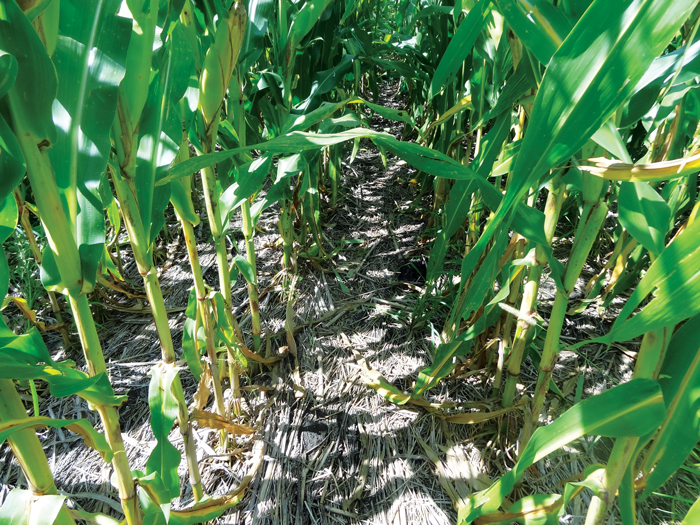
Yellowing lower leaves on corn plants are indicative of a nitrogen deficiency, exacerbated by the carbon-rich, heavy cover crop residues. Source: Paul Jasa
Won't Work in All Cropping Systems
Planting green is not appropriate for crops that depend on early planting and early maturity.
Expert Tip — Allelopathic Effects
“Cereal rye releases compounds that can inhibit seed germination; these chemicals are often cited as a reason for the yield decline most farmers experience when planting corn into growing cover crops.
It is more likely the nitrogen tie-up is the cause of yield decline. Although small-seeded weeds definitely are inhibited by allelopathy, large-seeded weeds and crops like corn, are minimally impacted. Most allelopathy studies that have shown otherwise were performed in the laboratory setting where differences between sterile media vs. soil impacts results.”
— Heidi Reed, Agronomy Educator, Penn State Univ