
More than 90% of the USDA’s workforce already works outside of Washington, but after Secretary of Agriculture Brooke Rollins announced a plan to move about 2,000 employees out of the nation’s capitol some lawmakers are crying foul.
The USDA is now taking comments on its reorganization, which unveiled last month. The massive agency is proposing to close one of its largest buildings and move the employees from Washington to five hub centers in the U.S. — Raleigh, Kansas City, Indianapolis, Fort Collins (Col.) and Salt Lake City.
There will be a 30-day public comment period on the plan, which Rollins says will help refocus the USDA putting more agency leadership closer to the farming communities they serve.
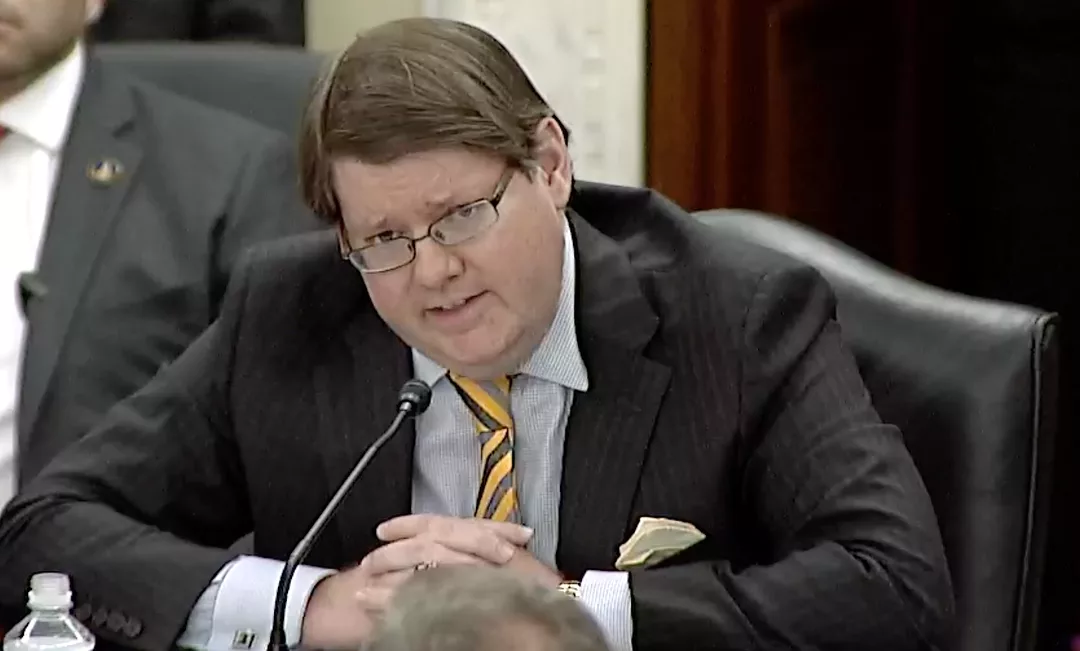
“President Trump made clear his second term would include relocating the sprawling federal bureaucracy to locations outside the National Capital Region,” said Deputy Secretary Stephen Vaden during Capitol Hill testimony.
He added the plan “right-sizes the USDA footprint, eliminates unnecessary management layers, consolidates redundant or duplicative functions, and, most importantly, allows USDA to deliver on its mission to the American people within the bounds of its available financial resources."
CLICK HERE for related story on USDA reorganization
All stakeholders, including USDA employees, members of Congress, and agricultural and nutrition partners, can provide feedback by emailing reorganization@usda.gov. The comment period is open through Aug. 26.
More than 15,000 USDA employees have already left the agency during downsizing that began when Trump took office — mostly through voluntary resignations.
Critics said the plan was announced without any input from agricultural leaders or lawmakers. Members of the Senate Committee on Agriculture, Food and Forestry appeared to show mixed feelings during a hastily called hearing July 30.
Sen. Amy Klobuchar (D-Minn.) was concerned the reductions in staffing would detract from the USDA’s performance, including its critical research work and advocacy in the nation’s capitol.
“You need people that can go over to the White House, so you don’t have people without interest in rural America making all the decisions,” Klobuchar said during the hearing.
She noted that the relocations of the USDA’s Agricultural Research Service and National Institute of Food and Agriculture resulted in reduced reports published by the ARS and slower grant processing by NIFA, according to a 2023 General Accounting Office report. Klobuchar said more than 1,600 employees have already left the USDA’s research agencies.
“This will be similar chaos on a much grander scale,” Klobuchar said. “It is unacceptable to learn about this just minutes before it was announced.”
Baden countered that from January 2021 through January 2025, during the Biden Administration, 2,200 employees left Washington, “and there was no outcry or committee hearing. For more than 1,700 days, which extended well beyond any fair pandemic definition, the USDA was on a maximum telework footing.
“Both career and political leadership rarely set foot in USDA’s headquarters. Staff moved away from National Capitol Region, expected not to be asked to return. There was no notice, outcry or committee hearing,” Baden said. “It’s insulting to suggest the more than 90% of USDA employees who clock in every day outside of D.C. are somehow less important or less vital than the people who do the same in D.C.”
Baden also noted that retaining talent in the agency is a major concern and the high cost of living in Washington — especially housing prices — were making it difficult for young families to get established. “We want people to come to USDA for career, to start a family and to stay with us,” he said.
The USDA has 4,754 facilities at which employees report to work daily and only 4 facilities are being closed, he added.
When asked to explain how the administration decided what facilities to close, Baden said a federal act approved by the Senate in January, while President Biden was still in office, mandated all buildings leaded or owned by a government agency must be 60% occupied or consolidation would be needed. “None of the buildings in capital region meet this occupancy rate,” Baden said.
Sen. Joni Ernst said holding the status quo would force taxpayers continue paying billions of dollars on deferred maintenance and operating costs for buildings that are almost entirely empty. “Just last week,” she said, “78% of seats in USDA’s South building weren’t filled.”