
The Michael Fields Agricultural Institute, in partnership with UW-Extension, is continuing its cover crop biomass testing program for the 2025-26 season.
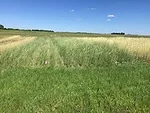
A cover crop of quick growing cereal rye can keep the soil in place over winter’s brown and blowing days. Its long roots soak up excess spring rains, and its straw helps block weeds.
In this video from Iowa State University, learn more about how to integrate cover crops into vegetable cropping systems, including the benefits of using covers in vegetable cropping systems, qualities of sorghum sudangrass as a heat tolerant cover crop, how sorghum sudangrass can provide large amounts of biomass, and more.
The emergence of no-till and cover crop farming practices on farms like Sheldon Luehmann’s near Altura might mean that farmers might soon be able to turn their plowshares into something else entirely. Although young, Luehmann already is confident enough to begin experimenting with unconventional techniques. Read more in this article from the Winona Post (Winona, Minnesota).
Harvesting corn for silage removes nearly all aboveground biomass, and this can be detrimental to soil. Despite degrading most near-surface soil properties, corn silage did not negatively impact subsequent soybean yields. Read more in this article from University of Nebraska Extension.
One important benefit of cover crops to our production system is providing an alternative selection pressure on weed populations. Cereal rye has the best potential to suppress weeds because it accumulates more biomass than other cover crop species. Read more in this article from Iowa State University Extension.
If wet spring weather has kept you from being able to plant, you may end up planting green into heavy cover crops, according to Pennsylvania cover crop expert Steve Groff. (Courtesy of Cover Crop Innovators)
The National No-Tillage Conference returns January 12-15, 2027!Build and refine your no-till system with dozens of new ideas and connections at the 35th Annual National No-Tillage Conference in Indianapolis, Jan. 12-15, 2027. Experience an energizing 4-day agenda featuring inspiring general session speakers, expert-led No-Till Classrooms and collaborative No-Till Roundtables. Plus, Certified Crop Adviser credits will be offered.
This week we are looking at a clip from Cody Hornaday, a technical agronomist with Koch Agronomic Services, as he explains a few tips that no-tillers and cover croppers should keep in mind for unlocking phosphorus in their soils.
Family Owned since 1964 – Remlinger Manufacturing was founded by Wilbur Remlinger in 1964 and the family tradition continues today with Wilbur’s grandson being the current CEO/President. Although the business has expanded and diversified, family remains a core value to the company and is evident in the company culture.
Made in USA – Remlinger Manufacturing is proudly located in Kalida, Ohio. We have dealers located across the US and Canada to conveniently serve our customers.
Quality Driven – With over 60 years of producing farm equipment, we continue our tradition of manufacturing high quality attachments and products to serve farmers around the globe.
Byron Seeds LLC is a team of individuals who have a passion for high energy forages, cover crops, and proper farming techniques. Byron personnel seek to understand our clients’ goals so that we may provide the best environment for our clients’ success through research, education, support, and...
Our years of experience and network of dealers make us the ideal choice for your mowing, no-till and horse drawn equipment needs. Use our Dealer Locator to contact your nearest I&J dealer today.