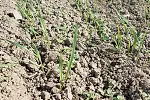
Oats were once a major Minnesota crop, with about 4 million acres planted annually on average until the early 1960s. But in 2025, oats accounted for only 195,000 planted acres in Minnesota, and those oats were used mostly for livestock feed and straw bedding.
While a minority of livestock owners feed their animals their cover crops, those that do see no ill effects & most see a financial value in grazing them
At the Univ. of Minnesota Research and Outreach Centers, researchers drilled rye at either 15 pounds or 60 pounds in fall 2024, and found no difference in total biomass produced in spring 2025.
When is a good time to change your cover crop routine? According to Carter Morgan, Cayuga, Ind., an early harvest could create the perfect environment for testing out new cover crop combinations on some acreage.
World dryland corn yield record holder times decomposition of species in cover crop mix to provide nutrients to no-till corn crop throughout the season
According to the 2024 Cover Crops Operational Practices Survey, managing carbon to nitrogen (C:N) ratios is the second-most challenging aspect of cover cropping
Jeff Olson of Winfield, Iowa, certainly sees the benefits of employing cover crops — not only in terms of his yields, but also how they have reinvigorated the soil.
The National No-Tillage Conference returns January 12-15, 2027!Build and refine your no-till system with dozens of new ideas and connections at the 35th Annual National No-Tillage Conference in Indianapolis, Jan. 12-15, 2027. Experience an energizing 4-day agenda featuring inspiring general session speakers, expert-led No-Till Classrooms and collaborative No-Till Roundtables. Plus, Certified Crop Adviser credits will be offered.
I'm in Yakima, Washington this week at FIRA USA where there's always lots of great ag technology on display. Why don't we go take a look at the newest edition of the Aigen robot. We'll hear from Kenny Lee, the CEO of Aigen.