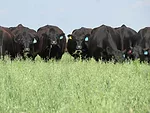
Small grains like barley or oats are often the first choice for establishing a cover crop on PP acres. The seed supplies of barley and oats are likely to be very tight and you may be looking far and wide to find some.
Many farmers planted a full season cover crop on their prevented planting acres or are out there now planting a winter annual, like cereal rye. This is a great management approach because you’ve either managed water in those fields similar to what you would have done with a cash crop or you will be managing water next spring with cereal rye planted this fall. Read more in this article from AgWeek.
Changes in federal grazing and harvesting rules on prevented-planting acres could help livestock producers in select counties replenish forage supplies, or at least offset shortages in perennial forage production, according to North Dakota State University Extension livestock specialists. Counties that qualify must have 15% or more acres classified as prevented plant. Read more in this press release from North Dakota State University Extension.
There is a lot of interest in haying or grazing a cover crop planted on prevented planting acres. This is mostly the result of projected lower yielding 2020 hay production due to a late freeze and current dry conditions. Read more in this article from AgWeek.
For the first time ever, the Ed and Andrew Askegaard families are using their prevented-planting insurance. “Here we are,” Ed said, “after Memorial Day, harvesting our COVID-19 corn." Read more in this article from the Capital Journal (Pierre, SD).
The USDA is providing additional flexibilities for producers to file on acres with failed crops or crops that were prevented from planting because of extreme weather events. USDA’s Farm Service Agency (FSA) is adding these flexibilities for Notice of Loss on both insured and uninsured crops to enable Service Centers to best assist producers.
Some of the prevented planting fields are just being looked at again as everyone gets caught up on spraying the crop fields and is now looping back to start managing their PP. In going back to those PP fields, the weeds have likely gotten big and herbicide options are getting limited. Read more in this article from AgWeek.
It’s tough to think about prevented planting, but coming up with a plan for those fields now is critical for following through with effective management. Bottom line is that something needs to be growing on those fields in 2020 to use water and prepare them for 2021. Read more in this article from AgWeek.
For many growers who took a prevented planting claim, 2019 might have been their first foray into cover crops. There’s always a learning curve to go through, but sometimes it leads to new ways of approaching challenges. Read on to see how a Minnesota livestock operation tackled their feed problems with covers.
Freezing temperatures are on their way for most of Nebraska. These freezing temperatures will play a key role in determining what can be grazed or hayed safely for your livestock. Read more in this article from the Norfolk Daily News.
The National No-Tillage Conference returns January 12-15, 2027!Build and refine your no-till system with dozens of new ideas and connections at the 35th Annual National No-Tillage Conference in Indianapolis, Jan. 12-15, 2027. Experience an energizing 4-day agenda featuring inspiring general session speakers, expert-led No-Till Classrooms and collaborative No-Till Roundtables. Plus, Certified Crop Adviser credits will be offered.
In our latest edition of the No-Till Farmer Newsletter, you may have seen our No-Till Innovator Special Report which includes tips and advice from expert no-tillers, agronomists and researchers.
Family Owned since 1964 – Remlinger Manufacturing was founded by Wilbur Remlinger in 1964 and the family tradition continues today with Wilbur’s grandson being the current CEO/President. Although the business has expanded and diversified, family remains a core value to the company and is evident in the company culture.
Made in USA – Remlinger Manufacturing is proudly located in Kalida, Ohio. We have dealers located across the US and Canada to conveniently serve our customers.
Quality Driven – With over 60 years of producing farm equipment, we continue our tradition of manufacturing high quality attachments and products to serve farmers around the globe.
Byron Seeds LLC is a team of individuals who have a passion for high energy forages, cover crops, and proper farming techniques. Byron personnel seek to understand our clients’ goals so that we may provide the best environment for our clients’ success through research, education, support, and...
Our years of experience and network of dealers make us the ideal choice for your mowing, no-till and horse drawn equipment needs. Use our Dealer Locator to contact your nearest I&J dealer today.