It looks like the cover-crop movement continues to build steam in the U.S., as growers are seeding them to reduce erosion, fix or scavenge nutrients, improve soil biological activity and the like.
Having no-tilled soybeans for many years, Gordon and Jeff Smiley faced a more difficult task 4 years ago, switching to no-tilled corn instead of holding on to their conventional system.
No-tiller Steve Pope is working with cover crops and interseeding on the family’s Oklahoma farm to improve crop diversity, reduce weed pressure and rebuild worn-out soils.
Iowa no-tiller Roger Harrington has seen his share of challenges with covers, but has found a combination that saves soil, adds nitrogen and reduces erosion and weed pressure.
Like many no-tillers, Roger Harrington likes seeding cover crops to improve organic matter, fix nitrogen (N) in the soil and reduce erosion, weed pressure and compaction.
No-tillers just starting to use annual ryegrass should follow a few simple rules to take advantage of this cover crop’s compaction-busting, nitrogen-scavenging benefits.
With its prolific root system and economical price tag, annual ryegrass is one of the most popular cover crops no-tillers have at their disposal. It’s also gotten a bad rap for being tough to manage, says Dan Towery.
Iowa no-tiller Joe Kriegel uses cereal rye and frost-seeded red clover in a rotation with corn and soybeans to reduce erosion, improve soil fertility and rescue heavily tilled fields.
As I've pointed out previously, there's a lot of conflicting research when it comes to the effects of cover crops in farm regions where annual moisture is limited, especially around the issue of water use by covers.
No-till practices alone may not sequester as much organic carbon in soil profiles as previously thought, but seeding cover crops could help rebuild it, says University of Illinois researcher Ken Olson.
Split nitrogen applications and cover crops are helping Iowa grower Ed Ulch improve his long-term no-till operation while enhancing the protection of local waterways.
When Ed Ulch took the plunge with no-till during the 1970s, his main goals were economic: cut trips across the field, reduce expenses and hold the line on yields.
The National No-Tillage Conference returns January 12-15, 2027!Build and refine your no-till system with dozens of new ideas and connections at the 35th Annual National No-Tillage Conference in Indianapolis, Jan. 12-15, 2027. Experience an energizing 4-day agenda featuring inspiring general session speakers, expert-led No-Till Classrooms and collaborative No-Till Roundtables. Plus, Certified Crop Adviser credits will be offered.
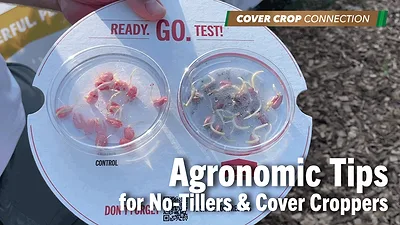
This week we are looking at a clip from Cody Hornaday, a technical agronomist with Koch Agronomic Services, as he explains a few tips that no-tillers and cover croppers should keep in mind for unlocking phosphorus in their soils.
Family Owned since 1964 – Remlinger Manufacturing was founded by Wilbur Remlinger in 1964 and the family tradition continues today with Wilbur’s grandson being the current CEO/President. Although the business has expanded and diversified, family remains a core value to the company and is evident in the company culture.
Made in USA – Remlinger Manufacturing is proudly located in Kalida, Ohio. We have dealers located across the US and Canada to conveniently serve our customers.
Quality Driven – With over 60 years of producing farm equipment, we continue our tradition of manufacturing high quality attachments and products to serve farmers around the globe.
Byron Seeds LLC is a team of individuals who have a passion for high energy forages, cover crops, and proper farming techniques. Byron personnel seek to understand our clients’ goals so that we may provide the best environment for our clients’ success through research, education, support, and...
Our years of experience and network of dealers make us the ideal choice for your mowing, no-till and horse drawn equipment needs. Use our Dealer Locator to contact your nearest I&J dealer today.