
Cover Crop Strategies editors encounter a variety of articles, social media posts, podcasts and videos that offer a unique look at various aspects of our great agricultural industry. Here is our favorite content from the past week:
- EarthScout L4+ Soil Moisture Sensor Review in Long Term Cover Crops
- Planting Green into Cereal Rye
- 193 Pounds of Nitrogen from Cover Crops
- Role of Cover Crop Biomass
- The Future of American Agriculture with Robert F. Kennedy, Jr. and Rick Clark
EarthScout L4+ Soil Moisture Sensor Review in Long Term Cover Crops
Matt Griggs, a Tennessee farmer, tests the EarthScout L4+ Soil Moisture Sensor in his long term test plots. Over 10 years old, his test plots look at the long term effects of no-till and cover crops. Watch this video to hear his thoughts on cover crop's effect on water infiltration and his review on the moisture sensors.
Planting Green into Cereal Rye
Fox Demo Farms checked in with Kurtis Ambrosius, near Seymour, Wis., who was planting corn into standing cereal rye. Last fall, Kurtis planted his rye at about 60 pounds per acre. When farms plant for soil health, and not for forage, Fox Demo Farms usually recommend lower rates of rye (20-30 pounds per acre), especially if planting earlier in the fall. However, Kurtis is looking to build biomass on this field and therefore, he planted at a higher rate and is letting the cover grow beyond 16-18 inches.
193 Pounds of Nitrogen from Cover Crops
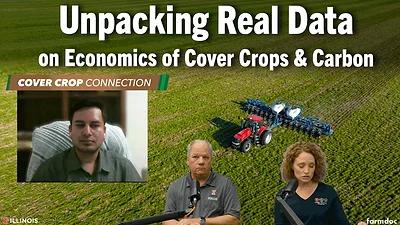
Ryan Gibbs, a farmer from Northeast Iowa, shares insights on cover crop biomass testing, nitrogen sequestration and soil health practices. The conversation covers a wide range of topics related to agriculture, soil health and farming practices. It delves into the importance of biochemistry in agriculture, the need for farmers to regulate themselves, the profitability of rotational grazing, the impact of cover crops and the role of AI in agriculture. It also highlights the significance of soil biology, the outdated nature of fertility recommendations and the potential for organic production.
Role of Cover Crop Biomass
Andrew McGuire, an Extension Agronomist from Washington State University, share the benefits of cover crop biomass. Biomass covering the soil helps hold it in place to reduce wind, water erosion and increase organic matter. McGuire explains why building organic matter takes several years and how biomass impacts weed control.
The Future of American Agriculture with Robert F. Kennedy, Jr. and Rick Clark
Secretary Robert F. Kennedy, Jr. sits down with regenerative Indiana farmer Rick Clark to discuss the future of American farming and how regenerative agriculture is reshaping the way food is produced. Rick shares his journey from conventional farming to regenerative agriculture, explaining how practices like cover crops, no-till farming, and rebuilding soil health have lowered costs, improved profitability, and strengthened the resilience of his operation. This conversation explores what it will take to build a more resilient agricultural system.
Is there something you want to share in "This Week"? Send us an email.